The Grid Is Under Emergency Orders This Week — Here's How to Keep Your Home Security Camera Running Through a Heat Wave
If your home security camera has been glitching, dropping its live feed, or shutting off entirely this week, it isn't your imagination. The U.S. Department of Energy issued an emergency order on July 14, 2026, directing the regional grid operator PJM — which serves roughly 65 million people across the Mid-Atlantic and parts of the Midwest — to keep extra power plants dispatched through July 21 to avoid blackouts during the ongoing heat wave. It's the kind of order that used to be rare and is now a fairly routine part of summer.
That matters for home security in a way most people don't think about until it happens: a security setup is only as reliable as the power and the device behind it. Here's what the current grid strain and heat mean for a home security camera, especially if you're using a phone (new or repurposed) as one, and how to keep it working through the rest of the season.
A Grid Emergency Is Happening Right Now
The DOE's July 14, 2026 order cited the North American Electric Reliability Corporation's 2026 Summer Reliability Assessment, which flagged that PJM could need demand-response measures if extreme heat pushed usage high enough. The same DOE release noted that more than 35 gigawatts of backup generation capacity exists nationwide that can be called on in emergencies like this one, and cited a sobering baseline figure from DOE's national laboratories: power outages already cost Americans an estimated $44 billion a year, before factoring in extreme-heat summers like this one.
Grid strain isn't just a big-event story, either. According to the U.S. Energy Information Administration (2025), the average U.S. electricity customer experienced about 11 hours of power interruptions in 2024 — nearly double the annual average from the decade before. Most of that time traced back to a handful of major hurricanes, including Helene and Milton. Heat waves add a separate kind of strain: air conditioners running overtime push demand to its yearly peak right as the grid has the least slack to give, which is exactly the scenario behind this week's PJM order.
Heat Is Hard on the Phone You're Counting On
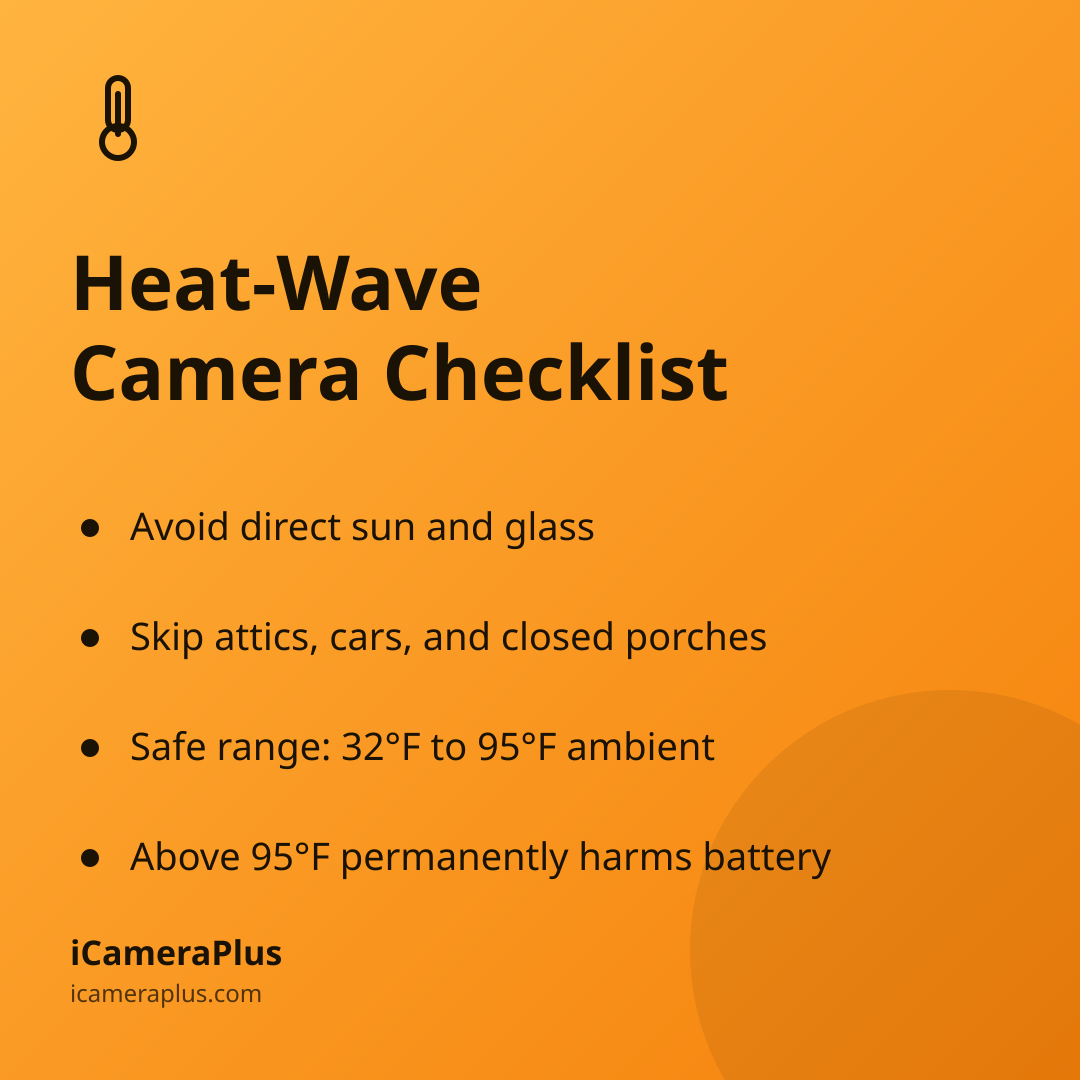
If you're using a phone as your home security camera — a genuinely smart, low-cost way to get 24/7 coverage of your own property — heat is the thing most likely to take it offline, independent of any power outage. Apple's own guidance states that iPhone and iPad are designed to operate in ambient temperatures between 32°F and 95°F (0°C to 35°C). Push past that and the device throttles itself to protect its internals: charging slows or stops, performance drops, and you may see the "Temperature: iPhone needs to cool down" warning before recording stops altogether.
Heat is also the fastest way to wear down the lithium-ion battery inside the phone. Apple warns that charging or operating a device above 95°F can permanently reduce battery lifespan. A phone mounted on a windowsill, in a car, or in an attic during a heat wave can easily blow past that threshold, even with the AC running elsewhere in the house.
Where You Mount It Matters Even More Right Now
A few adjustments make a real difference during a stretch of extreme heat:
- Avoid direct sun and glass. A phone facing a window in direct afternoon sun sits behind what's effectively a magnifying lens. Angle it away from direct light, or mount it a few inches back from the glass.
- Skip attics, cars, and closed porches. These spaces routinely run 20–30°F hotter than the outside air in summer — well past a phone's safe operating range.
- Give it airflow. A phone wedged into a tight case or bracket with no airflow traps its own heat. A stand or mount with open sides helps it shed heat the way it's designed to.
- Skip the thick case while it's mounted. Cases are great for drop protection but can insulate heat right when you need the opposite.
These same principles apply whether the camera is watching your front door, a garage, or — during a heat wave especially — a pet left home alone with the AC running. If that's your main use case, our pet camera guide has more on safe placement for keeping an eye on animals in the heat.
What Happens to Your Footage When the Power Blips
Given how common short interruptions have become, it's worth thinking through what happens to your security recording during a blip, a brownout, or a full outage. If a camera only stores footage locally, on the device itself, an outage or a heat-triggered shutdown can mean losing the exact window of time you'd most want to review. This is where a service like iCameraPlus is useful: it archives footage off-device as it records, so a power hiccup or a phone that needed to cool down doesn't erase what was already captured, and you can still check the live feed remotely once things are back up. For a broader look at setting one up, see our guide to home security cameras.
A Heat-Wave Checklist for Your Home Security Setup
- Check the phone's temperature by hand periodically — if it's hot to the touch, move it or give it airflow before it shuts itself down.
- Keep a portable battery pack or a small UPS on hand so a brief outage doesn't take your router and camera offline at the same time.
- Confirm your home Wi-Fi router isn't also baking in direct sun or a closed cabinet; it's just as heat-sensitive as the phone.
- If you rely on a live feed to check in during the day, have a backup plan (a neighbor, a second camera) for the rare stretch when both the grid and the device are under stress at once.
- Follow your utility's outage alerts, FEMA's power outage preparedness guidance, and the National Weather Service's heat guidance so you're not caught off guard by a forecasted demand-response event.
An Old Phone Is the Right Tool for This Job
There's a practical upside to all of this: a heat wave is a good reason to put a spare phone on security duty instead of your everyday one. If a repurposed device does get too hot and needs a few minutes to cool down, you're not sacrificing your primary phone's charging speed or long-term battery health to get it — and you're getting real use out of a device you might otherwise have left in a drawer or recycled. Running it through an app like iCameraPlus, with recording backed up off-device, means the heat wave becomes an inconvenience rather than a gap in your coverage.
Bottom Line
Grid emergencies like the one PJM is under this week aren't going away — they've become a normal feature of hot summers as demand climbs faster than the grid can expand. None of this means your home security has to go dark when the temperature spikes. Keep the device cool, keep your footage backed up off-device, and have a low-tech fallback for the rare moment when both the power and the phone are stressed at the same time.
Sources
- U.S. Department of Energy — Energy Secretary Secures Mid-Atlantic Grid Ahead of Period of Hot Weather (July 14, 2026)
- North American Electric Reliability Corporation — 2026 Summer Reliability Assessment
- PJM Interconnection — Territory Served
- U.S. Energy Information Administration — Hurricanes in 2024 led to the most hours without power in the United States in 10 years (Dec. 1, 2025)
- Apple Support — If your iPhone or iPad gets too hot or too cold
- Apple Support — iPhone battery and performance
- Ready.gov (FEMA) — Power Outages
- National Weather Service — Heat Safety