Do You Need a Full Security System or Just a Camera in 2026? New Data Weighs In
This article was produced with AI assistance. Sources are listed at the end.
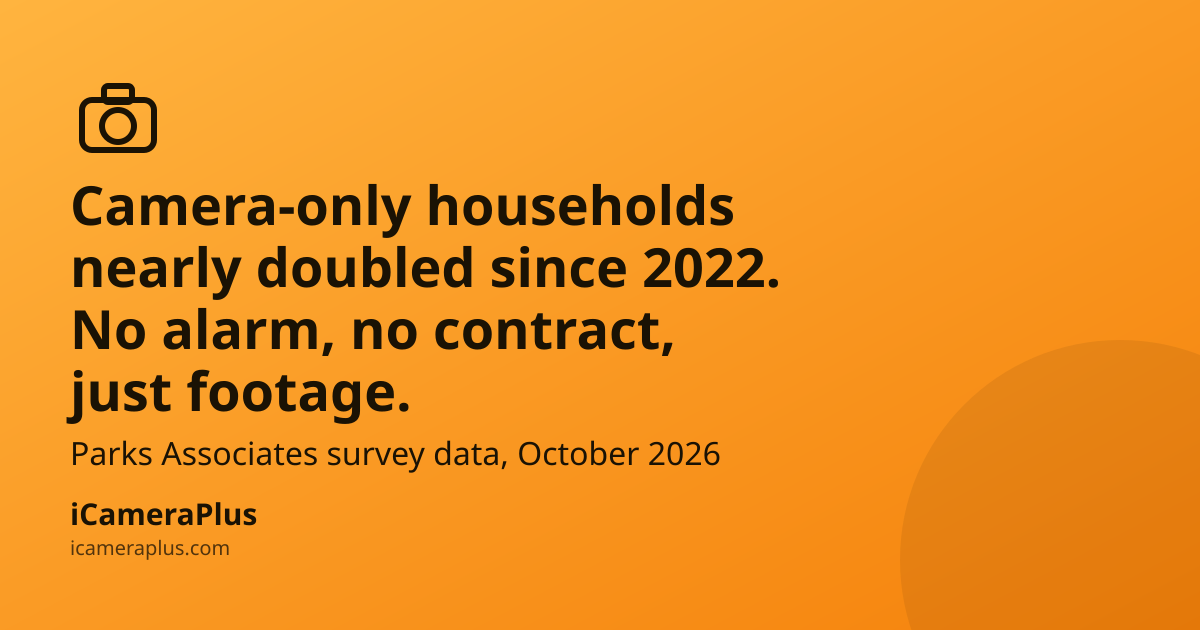
You don't necessarily need a full monitored alarm system to protect your home in 2026 — for a fast-growing share of households, a camera alone already does the job. New survey data released October 20, 2026 by Parks Associates shows that camera-only ownership (a security camera or video doorbell with no alarm system attached) nearly doubled between 2022 and 2026. The right choice mostly comes down to one question: do you want a professional service to call 911 for you, or just a clear, remote-accessible record of what happened?
What does the new 2026 data actually show?
Parks Associates surveyed 8,000 US internet households for its study Home Security in Transition: The Future of Protection, published October 20, 2026. The findings capture a market that's splitting into two camps rather than converging on one:
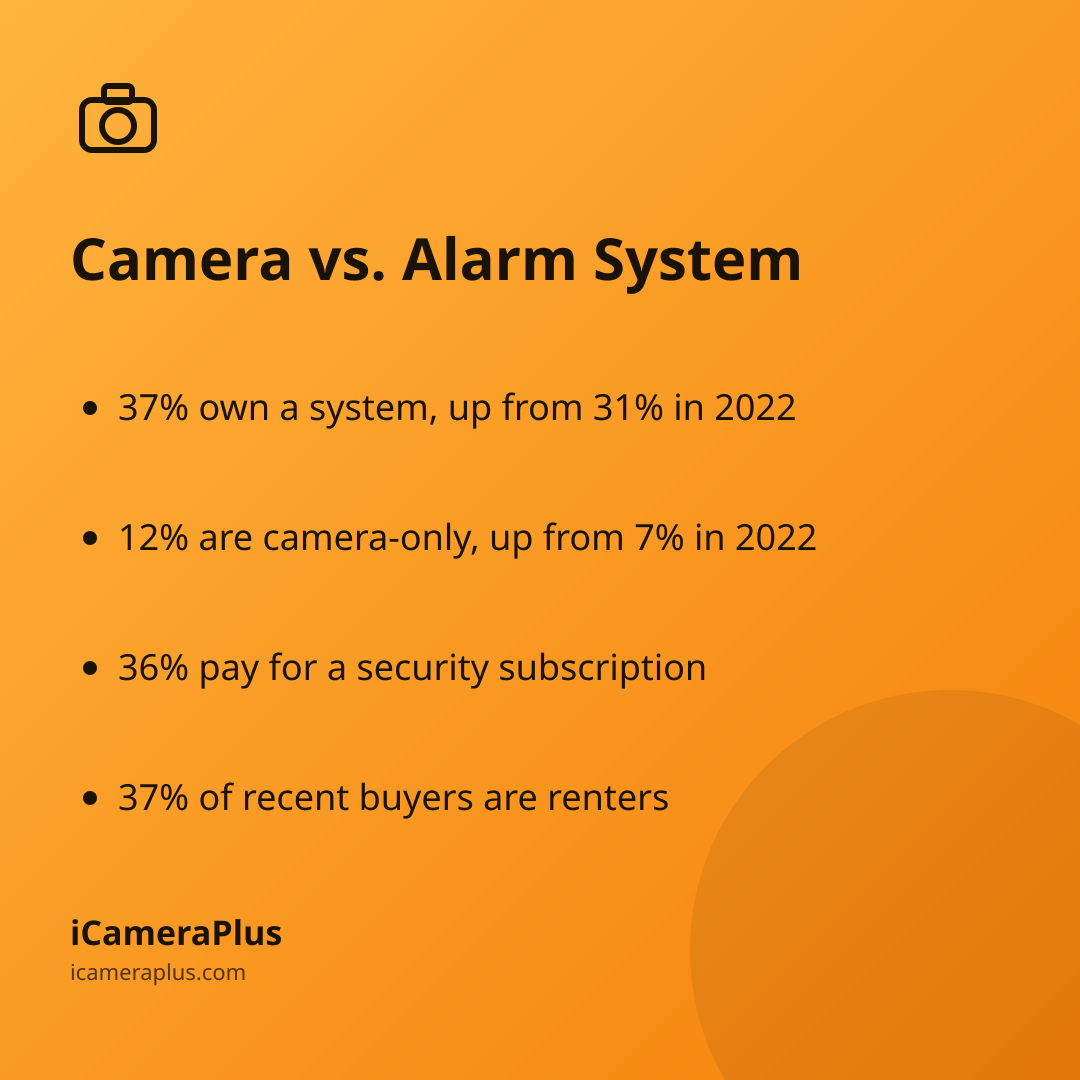
- 37% of US internet households now own a security system, up from 31% in 2022, according to Parks Associates' October 2026 report.
- 12% of households own a security camera or video doorbell without any attached alarm system, up from 7% in 2022 — the camera-only segment nearly doubled in four years, per the same study.
- 36% of households pay for some form of security subscription, including professional monitoring or a paid plan tied to a standalone camera, Parks Associates found in 2026.
- Among people who bought a security system within the past year, 37% are renters, compared with just 8% of those who bought more than six years ago.
In other words, both the "full system" and the "camera only" groups are growing — they're just growing for different reasons, and often for different people.
Why are camera-only households growing so fast?
The clearest driver is mobility. Nearly a third of households that bought security within the past year had also moved during that same period, according to Parks Associates' 2026 research. Renters don't want to drill into walls, sign multi-year monitoring contracts, or leave hardware behind when a lease ends — a standalone camera sidesteps all three problems.
"Renters represent an important growth opportunity for the security industry. Security providers have traditionally focused on homeowners, but the market is changing," said Jennifer Kent, SVP and Principal Analyst at Parks Associates, in the October 2026 release. Kent also pointed to Apple's entry into the space as another sign of where adoption is heading, noting that cameras, video doorbells, and other connected devices are increasingly driving the market, per the same release.
Long subscription commitments are also losing favor for reasons beyond security specifically — our guide to whether click-to-cancel is the law yet for camera subscriptions covers how federal rules are starting to catch up with exactly this frustration.
What does a monitored alarm system give you that a camera doesn't?
A professionally monitored system still does something a camera alone can't: it has a human on the other end who can call emergency services, even if you're asleep, at work, or your phone is dead. Door and window sensors also catch an intrusion attempt before anyone steps fully inside, which a camera pointed at one room can't always do. If you want guaranteed dispatch and whole-perimeter sensor coverage, a monitored system is still the more complete tool — and some home insurers offer a discount for having one, though terms vary, so check directly with your insurer.
What does a standalone camera give you that a system doesn't?
Flexibility, mostly. A camera has no multi-year contract, no installation crew, and nothing to uninstall when you move. It also lets you actually look at what happened, not just receive an alert that something did. That's a meaningful difference: a sensor tells you a door opened; a camera shows you who opened it.
This is where the phone already sitting in your drawer becomes genuinely useful instead of e-waste. Before buying a refurbished phone just to turn into a camera, it's worth checking whether an old device you already own can do the job. iCameraPlus turns a phone you already own into a 24/7 camera for monitoring your own property — continuous recording, a private cloud archive you can browse from the web, live view, and remote start/stop, on both iOS and Android — without adding new hardware or a long-term contract.
Camera-only households without a monitored alarm system nearly doubled in just four years.
Quick takeaways
- No long-term contract required
- Works with a phone you already own
- Rent-friendly, nothing to drill
- You can add monitoring later if needed
So which one should you actually get in 2026?
If you live alone, travel often, or specifically want someone else to summon help while you can't, a monitored system still earns its cost. If what you actually want is to know what happened at your front door, in your driveway, or in a room while you were out — and to be able to pull that footage up yourself — a standalone camera frequently covers the job, at a fraction of the commitment. Plenty of households end up doing both over time, starting with a camera and adding monitored sensors later, or the reverse.
Quick answers
Does a camera without professional monitoring still deter break-ins? Visible cameras are widely recommended by police departments and security professionals as a deterrent; the deterrent effect comes mainly from visibility, not from whether footage is watched by a monitoring company in real time.
Can renters legally install their own security camera? In most cases, yes, for cameras pointed at your own door, porch, or interior — but lease terms and local law vary, so check your rental agreement and local recording rules before installing anything, especially in shared spaces.
Can I switch from camera-only to a monitored system later? Yes — nothing about starting with a standalone camera locks you out of adding a monitored system afterward, and many providers sell sensors and monitoring as an add-on rather than a bundled requirement.
Sources
- Parks Associates: "37% of Recent Home Security System Buyers are Renters as Apple Enters The Smart Home Market," PR Newswire, October 20, 2026
- "37% of Recent Home Security System Buyers are Renters: Parks Associates," Security Sales & Integration, October 2026
- "Research: Renters Account For 37% Of Recent Security Buyers," TWICE, October 2026