The Environmental Impact of E-Waste: What Really Happens to the Phone You Throw Away
Open the drawer. There's a good chance an old phone is sitting in it right now — cracked screen, dead battery, or simply replaced by something newer. Multiply that by a few billion people and you get one of the fastest-growing waste problems on Earth.
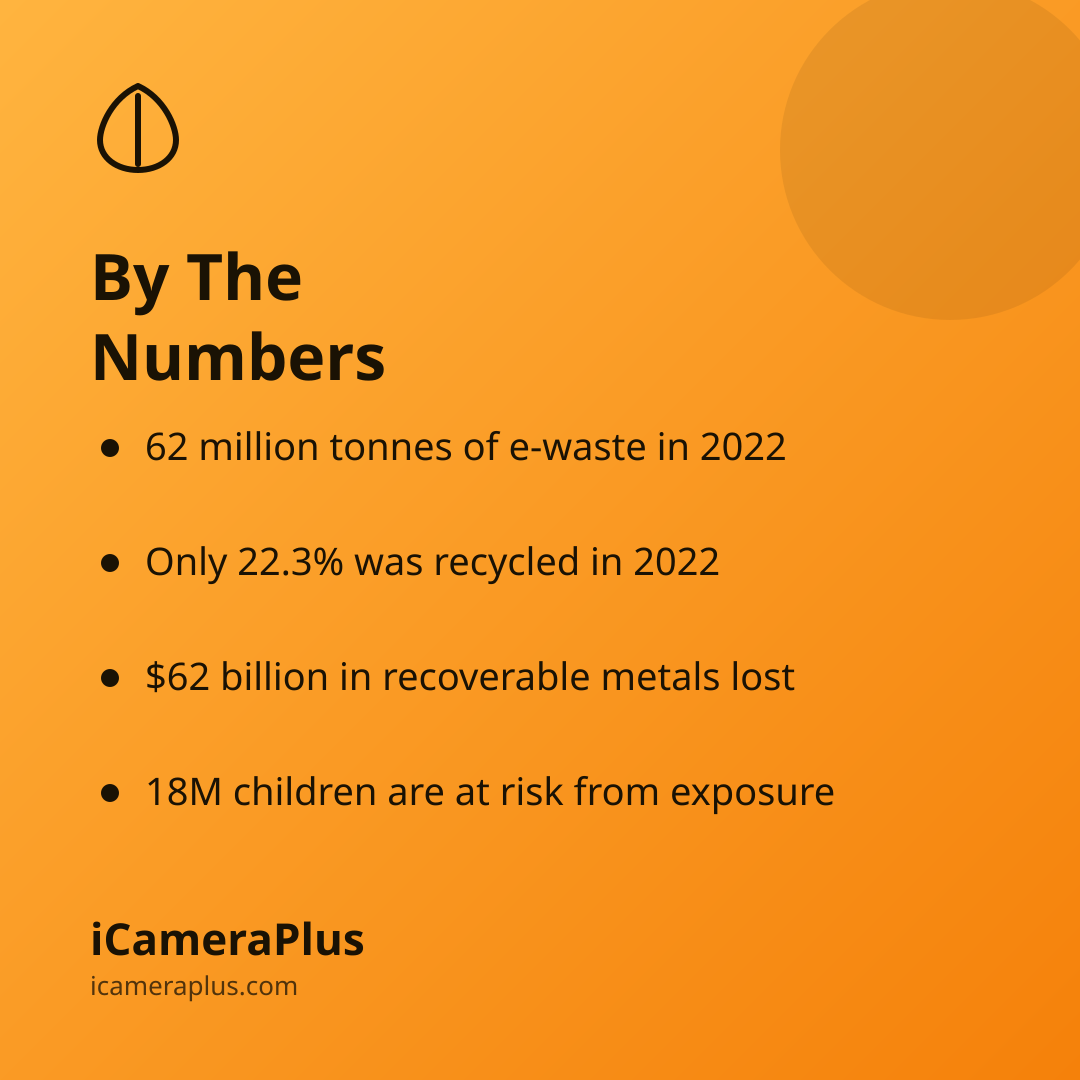
In 2022 the world generated a record 62 million tonnes of electronic waste — and formally recycled barely a fifth of it. This isn't a fringe environmental issue; it's a mainstream one, and the peer-reviewed research on where all those devices end up is sobering.
E-waste is the world's fastest-growing waste stream
According to the UN's Global E-waste Monitor 2024 — published by the International Telecommunication Union (ITU) and UNITAR — global e-waste has climbed 82% since 2010 and is on track to reach 82 million tonnes by 2030.
The recycling side isn't keeping up. Only 22.3% of the e-waste generated in 2022 was documented as properly collected and recycled. The UN found that electronic waste is now rising five times faster than documented recycling — and projects the recycling rate will actually fall to around 20% by 2030 as the pile grows faster than we can process it.
A single old phone can contain a thousand chemicals
Electronics aren't inert. The World Health Organization notes that informal e-waste recycling can release up to 1,000 different chemical substances into the environment, including well-documented toxics such as lead, mercury, cadmium, brominated flame retardants and dioxins.
When a device is buried in a landfill or burned in an open-air scrapyard, those substances don't disappear — they migrate.
The damage doesn't stay in the landfill
Systematic reviews of e-waste sites around the world have measured how far the contamination travels. Toxic metals leach out of discarded electronics and into soil, sediment, groundwater and surface water. A meta-analysis of mercury exposure found that average soil and sediment mercury levels at e-waste sites were at least eight times higher than at comparable control sites.
Once in rivers and groundwater, heavy metals like lead, cadmium and mercury are toxic to aquatic life — reducing reproduction, stunting growth and increasing mortality — and they work their way back up the food chain to us.
The human cost falls on the most vulnerable
The WHO estimates that as many as 18 million children and adolescents, plus 12.9 million women, are at risk from the toxic exposure of informal e-waste recycling. Children as young as five have been reported working in sorting and dismantling sites.
The health effects WHO links to this exposure include:
- Adverse birth outcomes, including higher rates of stillbirth and premature birth
- Impaired neurodevelopment and learning, particularly from lead
- Reduced lung and respiratory function and increased asthma
- DNA damage and impaired thyroid function
Mercury and other toxics can cross the placenta and contaminate breastmilk, meaning the exposure can begin before a child is even born.
We're also throwing away $62 billion
There's an economic irony buried in the pile. The same UN report estimates that the recoverable metals in 2022's e-waste — gold, copper, iron, rare-earth elements — were worth about US$62 billion. Most of it was simply lost. "Urban mining" a tonne of discarded phones can yield more gold than a tonne of ore from an actual gold mine, yet the vast majority is never recovered.
Why reuse beats recycling
Recycling is good — but it's the last resort, not the first. The internationally recognised waste hierarchy ranks options from best to worst: reduce, reuse, then recycle. Recycling still consumes energy, still loses materials, and — as the numbers above show — still leaks toxics wherever it's done informally.
Reuse sits one full tier higher. And for electronics it has an outsized climate payoff: lifecycle studies consistently find that roughly 80% of a smartphone's total carbon footprint comes from manufacturing it — mining the metals, fabricating the chips, assembling and shipping it — not from the years you actually use it. Chip production alone accounts for about two-thirds of that.
The greenest phone is the one that's already been made. Every extra year you keep a device in service is a year you don't trigger the enormous carbon and toxic cost of building a new one.
The easiest reuse of all: a second life as a camera
Here's the part that connects the research to your junk drawer. That "obsolete" phone is still a fully working computer with a good camera, Wi-Fi and a screen. It's no longer fast enough to be your daily driver — but it's more than capable of being a 24/7 security camera.
With iCameraPlus you can turn almost any old Android phone or iPhone into a live camera in a few minutes — as a home security camera, a baby monitor, or a pet camera you can check from anywhere. No new hardware to buy, nothing to bin. It's the waste hierarchy in action: the highest-value, lowest-carbon thing you can do with an old phone is simply keep using it.
If you're ready to give one a second life, start with our guide on how to turn your old phone into a security camera — or browse seven smart ways to reuse an old phone.

Sources & further reading
- UN ITU & UNITAR — The Global E-waste Monitor 2024
- UNITAR — Electronic Waste Rising Five Times Faster than Documented Recycling
- World Health Organization — Electronic waste (e-waste) fact sheet
- World Health Organization — Soaring e-waste affects the health of millions of children (2021)
- Environmental Research (PMC) — Systematic Review of Mercury Exposure among Populations in Contact with E-Waste
- Ericsson — Life cycle assessment of a smartphone