Back to School, Home Alone: A Safety Checklist for the Latchkey Hours
Buses are back on the road, lunches are back in backpacks, and for millions of families, so is a familiar stretch of the afternoon: the gap between when school lets out and when a parent gets home from work. For a lot of kids, that gap is spent alone.
It's a normal part of growing up, and most afternoons go by without incident. But the transition into a new school year is a good time to actually think through the plan, rather than assume it'll sort itself out. Here's what the research says, what the law says (it's less clear than you'd think), and a practical checklist for making the after-school hours safer.
How many kids are actually home alone?
More than you might guess. The Afterschool Alliance's America After 3PM survey — the largest household survey of its kind, covering families nationwide — found that 7.7 million children (13%) were alone and unsupervised after the school day ended, according to its 2020 report. That's down from a peak of 15.1 million in 2009, but it's still a lot of empty afternoons, and elementary-age kids in self-care have actually ticked up in recent years, per the same report.
Cost and access are the main drivers. In the same survey, parents cited affordability and availability as the top barriers to enrolling kids in afterschool programs — for many families, a supervised program simply isn't an option every day of the week.
Is your child old enough to be home alone?
There's no single national answer, and that surprises a lot of parents. According to the U.S. Department of Health and Human Services' Child Welfare Information Gateway, most states have no statutory minimum age at all — only a minority set one in law, and even those function more as guidelines than hard rules. State child neglect laws generally focus on whether a child was placed at real risk of harm, not on a specific birthday.
That puts the judgment call on you. Rather than looking for a magic age, child-safety groups suggest weighing:
- Whether your child can follow basic safety rules and reliably reach you or another adult
- How long they'd actually be alone — an hour after school is different from a full evening
- Whether they're comfortable being alone, not just "old enough" on paper
- Whether there are other kids in the house (a big sibling gap changes the calculus)
Safe Kids Worldwide and the American Red Cross both publish home-alone readiness checklists that are worth walking through with your child before the first solo afternoon, not after.
Building an after-school safety plan
A short, concrete plan beats a vague "call me if anything happens." Cover these before the school year gets going:
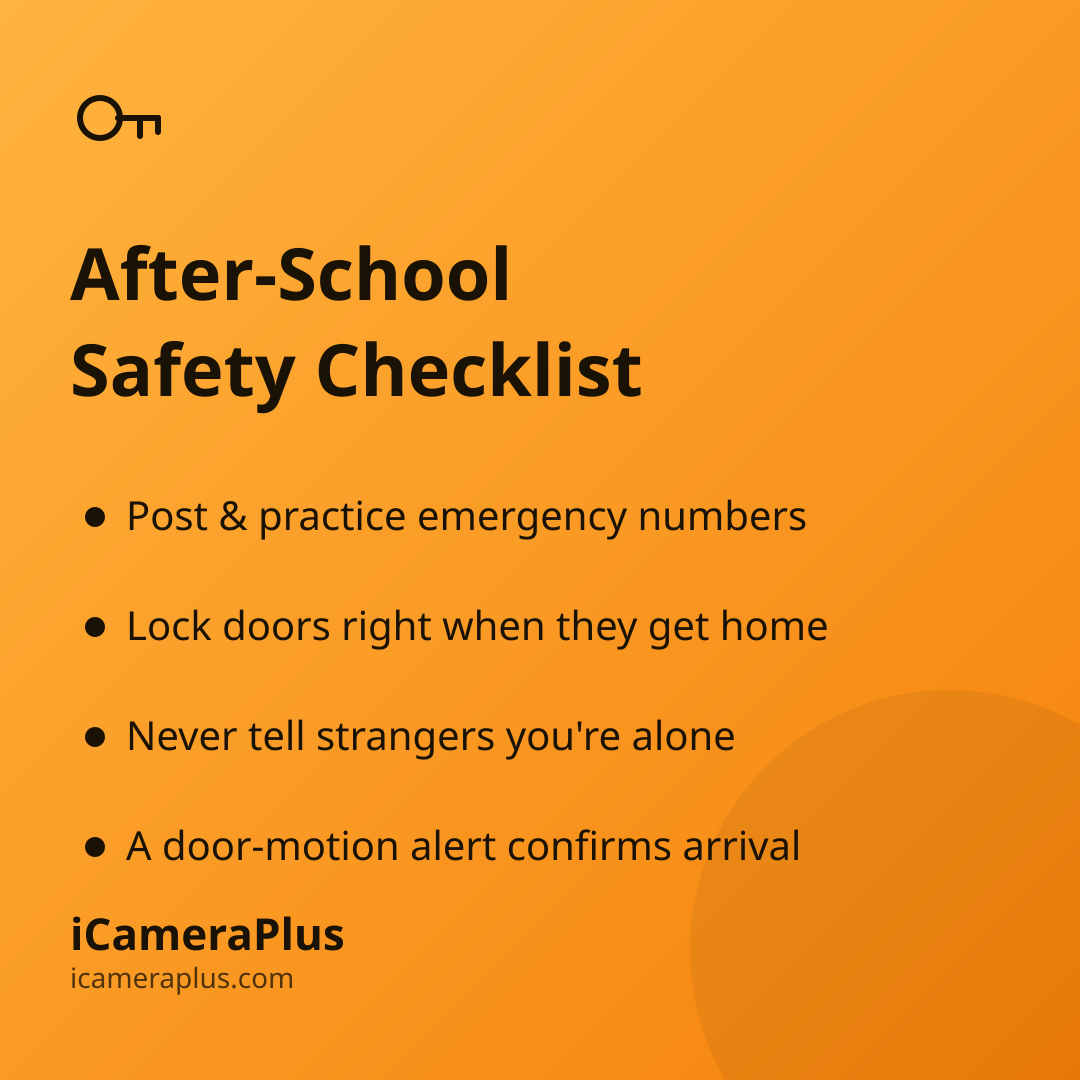
- Emergency numbers, posted and practiced. 911, plus at least two trusted adults your child can reach if you're unavailable — a neighbor or nearby relative works well.
- Door rules. Doors locked immediately on arrival, and never opened for anyone unexpected, delivery or otherwise, without checking with you first.
- What not to say on the phone or at the door. Kids should know never to tell a stranger they're home alone.
- Off-limits items secured. Firearms, medications, alcohol, and tools locked away or otherwise inaccessible, per Safe Kids Worldwide's home safety checklist.
- A fire and exit plan. Working smoke alarms and a clear, practiced way out — this matters more when there's no adult in the house to notice a problem early.
- A simple check-in routine. A text or call the moment they're home, and again before dinner prep or screen time starts.
Closing the "did they make it home?" gap
The hardest part of the afternoon isn't usually the hours your kid is home — it's the twenty minutes before you know for sure they arrived. A phone call helps, but calls get missed in class dismissal chaos, dead zones, and forgotten backpacks.
This is one place a camera pointed at your own front door or entryway earns its keep: a motion alert the moment someone comes through the door tells you, in real time, that your kid made it home — without you needing them to remember to text. It's not a substitute for the conversation about rules and expectations; it's a backstop for the day the phone is on silent in the bottom of a backpack.
You don't need to buy new hardware to set this up. Assurant's 2025 Mobile Trade-In and Upgrade Industry Trends data found that the average traded-in smartphone reached nearly four years old that year, which means most households have at least one retired phone sitting in a drawer — usually with a perfectly good camera. An app like iCameraPlus turns that spare phone into a continuous, owner-controlled camera: it can watch the entryway, send you a motion alert when the front door opens, and let you check in on a live view from work, with recordings kept off the device so a full afternoon of activity doesn't overwrite the moment you actually needed to see. If you want to set one up, our guide to turning a phone into a home security camera walks through placement and setup.
Whatever you use, keep it transparent: tell your child a camera watches the entryway and why, the same way you'd tell them about the door lock or the smoke alarm. This is about confirming they got home safely, not monitoring them secretly — and kids generally respond better to a rule they understand than one they discover.
Talk it through before day one
None of this replaces the conversation. Walk through the plan with your child before the first day back, not after something goes sideways. Ask them to repeat the rules back to you, practice the emergency-contact list together, and revisit the plan a few weeks in once you both know what the afternoon routine actually looks like in practice.
The after-school gap isn't going away for most working families, but a clear plan — and a simple way to confirm your child made it home — turns an anxious unknown into a routine part of the day.
Sources
- Afterschool Alliance, "America After 3PM" National Fact Sheet, 2020
- U.S. Department of Health and Human Services / Child Welfare Information Gateway: "At what age can a child legally be left alone?"
- Safe Kids Worldwide, Home Safety Checklist
- American Red Cross: Safety Steps to Follow if Kids Are Home Alone
- Resource Recycling: "Record $6.4B in trade-ins as older phones drive market," citing Assurant's 2025 Mobile Trade-In and Upgrade Industry Trends data