Do Break-Ins Really Spike During the Holidays? What a New 2026 Survey Found
This article was produced with AI assistance. Sources are listed at the end.
Yes — burglaries measurably increase in December, and a new 2026 survey shows most Americans are leaving their homes wide open to it. Nearly 3 in 5 Americans (59%) will spend at least one night away from home over the holidays this year, but only 40% of them ask anyone to check on the property while they're gone, according to an Insurify survey published October 20, 2026. Meanwhile, December sees more burglaries than any other month of the year.
With Thanksgiving travel, holiday shopping, and short winter days all landing in the same six-week stretch, this is the point in the calendar when an empty house is easiest to spot — and least likely to be checked on.
Do burglaries actually increase during the holidays?
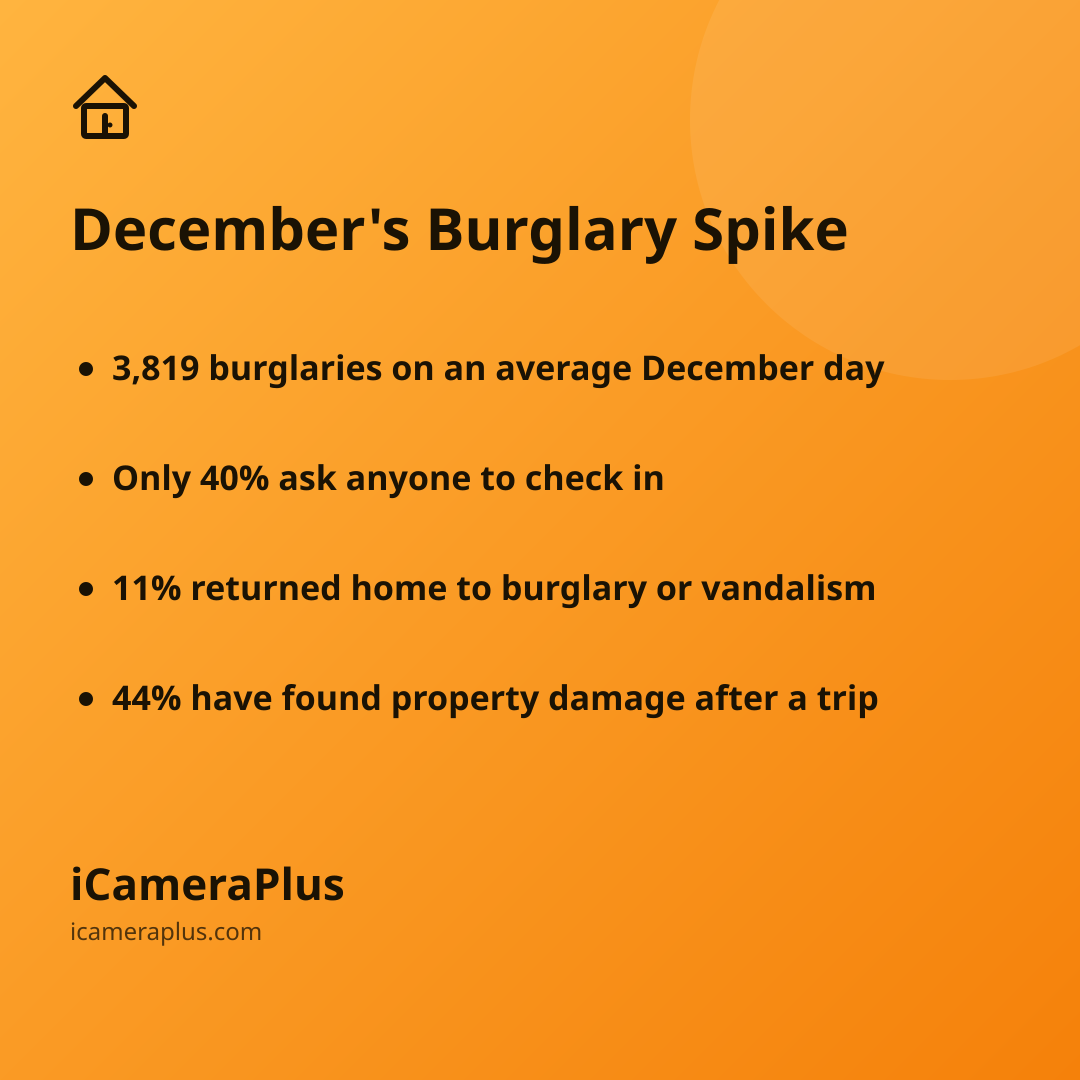
According to Insurify's analysis, the average December day sees 3,819 burglaries in the United States — about 1,100 more than the next-highest month. Insurify's survey, fielded September 18–23, 2026 among 1,000 U.S. residents, found that 11% of Americans have returned home from a trip to discover evidence of burglary or vandalism, a number that nearly doubles to 21% among Gen Z respondents. The same survey found 44% of Americans have come home from any trip to find some form of property damage, most often water damage from a burst or leaking pipe.
On an average December day, the U.S. sees 1,100 more burglaries than in any other month.
The pattern isn't limited to the U.S. A Leger survey commissioned by TD Insurance and published October 6, 2026 found that 48% of Canadians plan to leave their primary residence unattended for more than a day this fall or winter, and one in four who have done so in the past reported a weather, plumbing, electrical, or security issue while away. Twenty-nine percent said they were specifically worried about theft, break-ins, or vandalism.
Why do so few people arrange for someone to check in?
The gap between how many people travel and how many people plan for an empty house is the real story in both surveys. Insurify found 59% of Americans leave home over the holidays but just 40% ask someone to check on it — meaning most houses sit genuinely unsupervised for days at a time. TD's survey found a similar split: 53% of Canadians who leave home say they'd arrange for someone to check the property, which still leaves nearly half with no one watching at all.
Shorter daylight hours compound the problem. A home that's dark every evening for a week straight is a different signal to a passerby than a house that's merely quiet during the day — and that's exactly the pattern a multi-day holiday trip creates.
What else goes wrong while homeowners are away?
Burglary isn't the only risk tied to the season. A survey by Omnisend, cited in an April 2026 report on 2025 package theft, found that stolen packages cost Americans $12.8 billion in 2025, with close to half of all annual thefts concentrated in November and December. If you're traveling, packages can pile up on a porch for days before anyone notices.
Here's what tends to go wrong, based on the data above:
- No one checking the property
- Porch packages piling up
- Burst or leaking pipes going unnoticed
- Days of darkness signaling an empty house
How can you actually lower the risk?
None of this requires an elaborate setup. The basics that insurers and security researchers keep coming back to are the same ones that predate smart home tech:
- Ask someone to check in
- Put lights on a timer
- Pause or hold mail and packages
- Run a spare phone as a camera
If you're going through a house sitter or pet sitter, our guide on disclosing security cameras to a house or pet sitter covers what you're required to say and what's just good practice.
A phone you already own — the one in a drawer, not your daily phone — can also fill the gap for the handful of days a holiday trip actually lasts. Apps like iCameraPlus turn an old iOS or Android phone into a camera that records continuously, with video and audio, while you're away, and keeps the footage in a private cloud archive you can log into from any browser. You can check in on a live view or remotely stop the recording when you're back, without asking anyone to physically visit the house. It won't stop a burst pipe, but it answers the one question a holiday trip leaves open — what, if anything, happened while no one was home.
If you already run a camera and worry about it going dark during a winter storm, our breakdown of whether security cameras keep recording during a power outage is worth a look before you leave.
Quick answers
Does a security camera actually reduce holiday burglary risk?
Neither of the 2026 surveys measured camera ownership directly, but both point to the same gap: most people leave home without anyone checking on it. A camera that's running while you're gone doesn't prevent a break-in by itself, but it closes the information gap — you'll know what happened at your property instead of finding out only when you walk back in the door.
Should I still ask a neighbor to check in if I have a camera?
Yes. Cameras tell you what happened; a person can act on it — grab mail, check a leaking pipe, or call you if something looks wrong. Insurify's survey found that the 40% of people who already arrange a check-in are doing the thing most likely to catch a problem early, like a burst pipe, that a camera alone can't fix.
Do I need to tell my insurer I'm leaving home for an extended trip?
Policies vary, and this isn't legal or financial advice — check your specific policy and your state's rules before you travel. TD's survey found only 15% of Canadians check their policy's requirements before an extended absence, and just 7% notify their insurer, so it's worth confirming what your own policy actually requires.
Sources
- Insurify, "59% of Americans Will Leave Their Homes Unattended During the Holidays" (October 20, 2026)
- TD Insurance / Leger, "From burst pipes to break-ins, one in four Canadians have faced issues while away from home" (October 6, 2026)
- Chain Store Age, "Survey: Package theft totaled $12.8 billion in 2025," citing Omnisend data (April 2026)