Is Halloween 2026 Really the Most Dangerous Night for Kids? What the Safety Data Says About Your Porch
Yes — Halloween is statistically the most dangerous night of the year for pedestrians in the United States, especially for children. A JAMA Pediatrics analysis of more than four decades of federal crash data found that the risk of a pedestrian fatality is 43% higher on Halloween evening than on a comparable evening one week earlier or later. That doesn't mean you should skip trick-or-treating — it means the few hours around dusk on October 31 deserve a bit of extra planning, starting with the porch and sidewalk right outside your own front door.
Why Is Halloween So Much More Dangerous for Trick-or-Treaters?
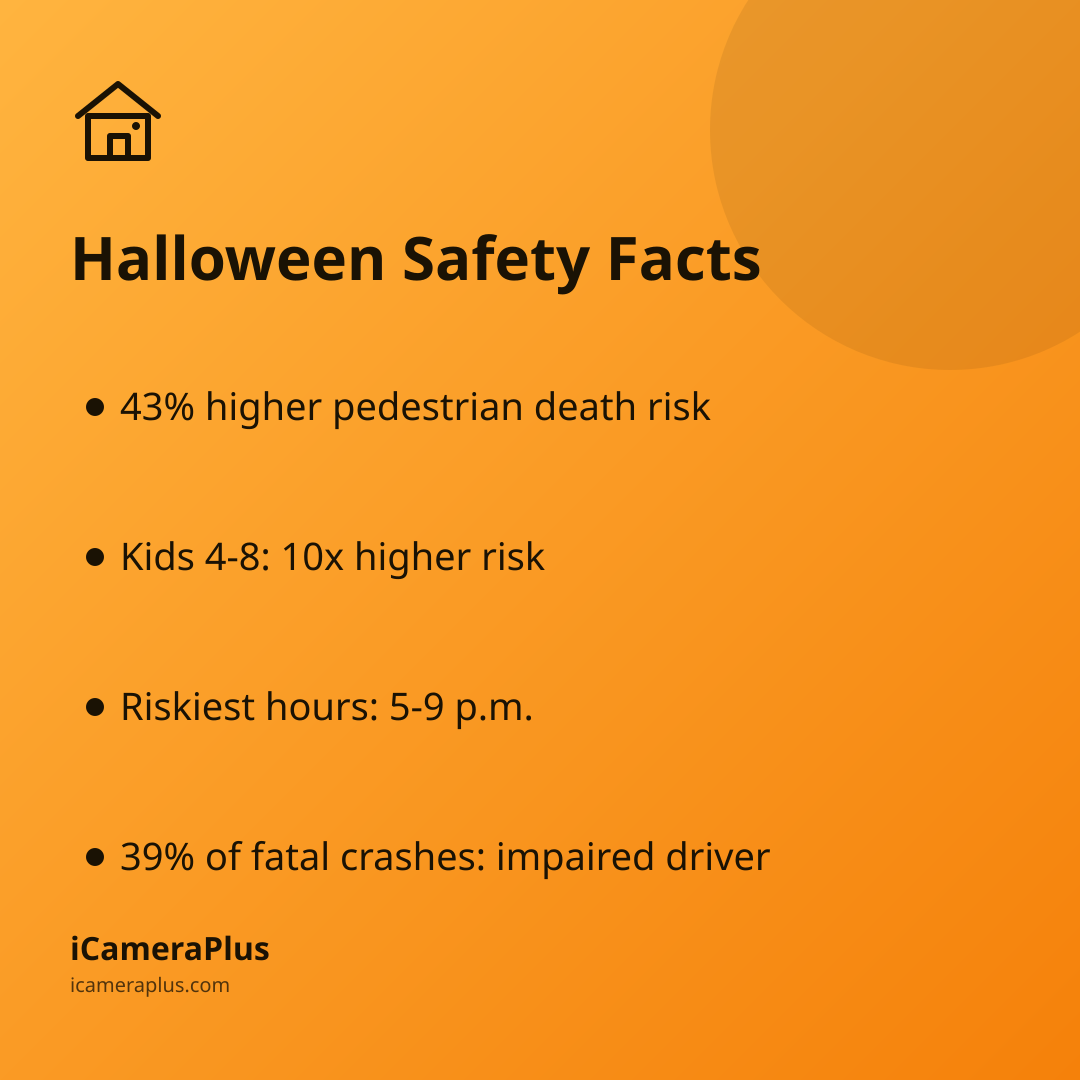
The clearest evidence comes from a study published in JAMA Pediatrics in January 2019. Researchers led by Dr. John Staples examined every fatal U.S. traffic crash between 1975 and 2016 using National Highway Traffic Safety Administration (NHTSA) records, then compared pedestrian deaths during Halloween evening hours to deaths during the same hours on control evenings the week before and after. The relative risk of a pedestrian fatality was 43% higher on Halloween (odds ratio 1.43), translating to roughly four additional deaths per Halloween night nationwide over the study period.
The risk wasn't spread evenly across age groups. Children ages 4 to 8 faced a tenfold increase in fatality risk compared with a typical evening — by far the sharpest spike of any group the researchers measured.
Kids ages 4-8 are 10 times more likely to be fatally struck by a car on Halloween than on a normal night.
What Time of Night Is Riskiest?
According to NHTSA's Halloween safety guidance, the most dangerous window is between 5 p.m. and 9 p.m., with a sharp spike between 6 and 7 p.m. — exactly when trick-or-treating peaks and when dropping light levels make costumed kids harder for drivers to see. The National Safety Council points to the same combination of factors: more pedestrians on residential streets than usual, masks and costumes that narrow a child's field of vision, and dusk arriving earlier in the evening than most drivers expect.
Does Halloween Also Bring More Property Crime?
Separately from pedestrian risk, Halloween night also shows up in insurance data as an unusually active night for property claims. A Highway Loss Data Institute analysis (part of the Insurance Institute for Highway Safety) reviewed vehicle vandalism claims from 2008 through 2012 and found an average of 1,253 claims filed on Halloween night, compared with 692 on an average day — nearly double. Driving is also riskier: citing 2022 NHTSA data, Mothers Against Drunk Driving reports that 39% of fatal Halloween crashes involved an impaired driver.
None of this means your street is in danger of a crime wave. It does mean that the combination of low light, more strangers passing your property, and more cars on residential roads adds up to a night where knowing what's happening at your own front door is genuinely useful — not paranoid.
How Can You Make Your Porch Safer This Halloween?
Most of what actually helps is simple and free. A few changes to your entryway do more than any gadget:
- Turn on porch lights before dusk
- Clear cords and decorations from the path
- Set camera alerts for 5–9 p.m.
- Bring electronics in after trick-or-treating
If you already have a home security camera watching the entry, this is the one night a year it earns its keep the most — both for reassurance during the riskiest hours and, if something does go wrong, for a clear record of what happened.
Should You Watch Your Porch Camera During Trick-or-Treating?
It's a reasonable habit for the riskiest two-hour stretch of the evening. Checking a live view while kids are out — yours or the neighborhood's — lets you confirm the walkway is clear, the lighting is working, and nothing unexpected is happening near the street. You don't need to buy new hardware to get this: an app like iCameraPlus can turn a phone you already own into a live porch camera with motion alerts, so you can glance at your entryway from wherever you are without adding another device to the pile.
The same setup pays off after the candy bowl is empty. Because iCameraPlus keeps footage in an off-device archive rather than only on the camera itself, a continuous recording of the evening is still there the next morning if you need to document vandalism for an insurance claim or simply want to see how the night actually went.
Quick answers
Is Halloween actually the most dangerous day for pedestrians, or is that just about kids?
Both. The JAMA Pediatrics study found a 43% higher pedestrian fatality risk across all ages on Halloween evening, but the increase is far steeper for young children — a tenfold jump for ages 4 to 8 specifically.
Does more foot traffic on Halloween mean more break-ins?
The data doesn't point to more home break-ins specifically, but insurance claims for vandalism and theft do spike that night. A well-lit, visible entryway with a working camera is a reasonable, low-effort precaution rather than an overreaction.
What's the single best thing to do to keep a porch safe on Halloween?
Good lighting matters most — it addresses the visibility problem behind most of the pedestrian risk. Pair it with a clear walking path and a quick check of your camera during the 6–7 p.m. peak for extra peace of mind.

Sources
- Staples et al., "Pedestrian Fatalities Associated With Halloween in the United States," JAMA Pediatrics, 2019
- National Highway Traffic Safety Administration, Halloween Safety Tips
- National Safety Council, Halloween Safety
- Insurance Institute for Highway Safety / Highway Loss Data Institute, Vehicle Vandalism Peaks on Halloween
- Mothers Against Drunk Driving, Impaired Driving Increases on Halloween (citing 2022 NHTSA data)