Security Camera Subscriptions Keep Climbing — What They're Really Costing You in 2026
Buy a security camera today and the sticker price is only the down payment. Most cloud video plans now cost more than they did two or three years ago, and the increases keep landing — a few dollars here, a plan rename there — until the "one-time purchase" quietly turns into a permanent monthly bill. If you're weighing a new camera, or wondering why the one you already own keeps getting more expensive, the last two years of pricing history are worth a look.
The Subscription Creep Is Real
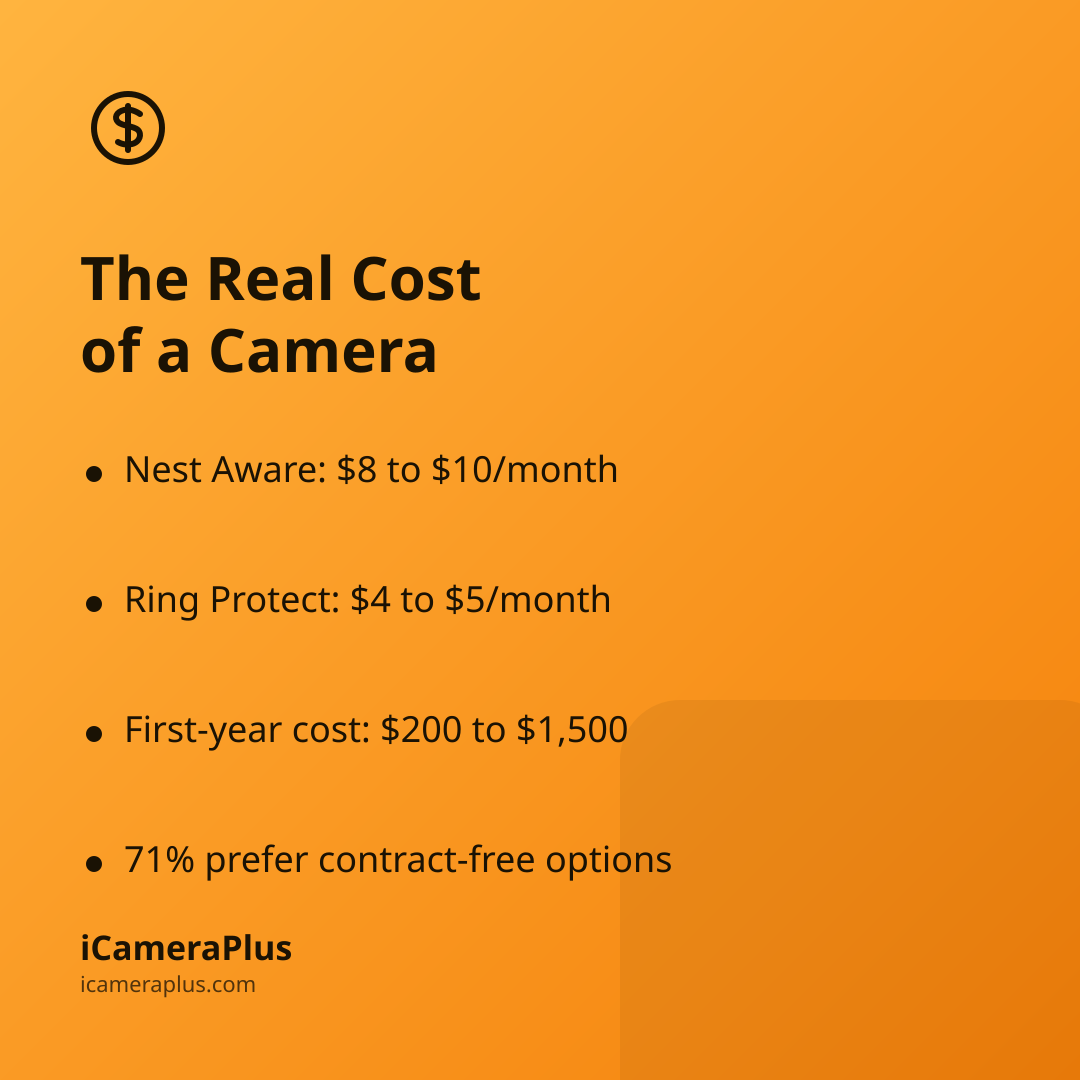
Google raised Nest Aware prices in August 2025 — its second increase in under two years, after a previous hike in September 2023. The basic Nest Aware plan went from $8 to $10 a month (or $80 to $100 a year), a 25% jump, while Nest Aware Plus rose from $15 to $20 a month (or $150 to $200 a year), up 33%, according to PCWorld and 9to5Google.
Ring's pattern looks similar. In 2022, Amazon raised the Ring Protect Basic plan for the first time since 2017, as reported by TechCrunch. By March 2024, Basic went up again, from $4 to $5 a month ($40 to $50 a year), a 25% increase, per Pocket-lint. Then, starting January 14, 2026, Ring restructured and renamed its entire Protect lineup, according to Ring's own support documentation — the kind of overhaul that historically has come bundled with new pricing tiers.
None of this makes either company unusual. It's simply how subscription-supported hardware tends to behave: the camera is a one-time purchase, but the service that makes it useful renews itself, and the price of that service is set by the company, not by you.
What a Camera Actually Costs Once You Add It Up
Add up the hardware, the storage plan, and — for some households — professional monitoring, and the real number is bigger than the box price suggests. According to Security.org's 2026 pricing guide (last updated May 2026), monthly cloud storage plans across major brands range from about $2.99 per camera (Wyze) to $19.99 (Canary), with Ring around $4.99 and Nest between $10 and $20. Factoring in optional professional monitoring, Security.org puts a realistic first-year total cost of ownership for a home security camera setup at $200 to $1,500, depending on how many cameras and which plan tier a household chooses.
That range is wide because it reflects a real choice every buyer has to make: pay once for the camera and accept limited or no cloud history, or pay every month indefinitely to keep a rolling archive of footage.
Most Shoppers Say They're Done With Contracts
Buyers seem to have noticed. In Security.org's 2026 DIY Home Security Study, based on a survey of 1,380 in-market home security shoppers, 71% said they now prefer contract-free options over long-term commitments. That's a meaningful shift for an industry that has historically bundled hardware with multi-year contracts and recurring monitoring fees — and it tracks with the plain math above: the more a subscription's price rises after you've already bought the hardware, the less appealing the whole arrangement looks.
Where a Phone You Already Own Changes the Math
Every price hike above applies to dedicated camera hardware — a device whose entire purpose is being a camera, sold at or near cost so the company can recover the margin through the subscription. A phone you already own skips that step entirely, since there's no new camera hardware to buy in the first place.
That's the idea behind turning an old phone into a home security camera: the lens, Wi-Fi radio, and battery are already sitting in a drawer. Apps like iCameraPlus use that hardware to record continuously, send motion alerts, and stream a live view to your own device remotely, while keeping an off-device archive so footage isn't lost if the phone itself is ever damaged, lost, or stolen. Whatever camera or app you end up using — phone-based or dedicated hardware — it's worth checking the same things: whether storage is on-device or off-device, whether there's a recurring fee at all, and what happens to your footage if you ever cancel. Those terms vary by app and are set by each provider's own store listing, so read them before you commit rather than after the first renewal notice arrives.
A Quick Cost Checklist Before You Commit to Any Camera
- Ask for the one-year number, not the box price. Add camera cost plus a full year of whatever storage plan you'd actually use.
- Find out what happens to footage if you cancel. Some plans delete cloud history immediately; others give you a grace period.
- Check whether storage is on-device or off-device. On-device-only storage (an SD card in the camera, or clips left on the phone itself) can be lost along with the hardware in a break-in, fire, or theft.
- Read the cancellation and renewal terms. Price increases are usually announced by email weeks ahead of your next renewal — worth watching for either way.
- Compare against reusing hardware you already own. If a spare phone can do the job, you've already eliminated the cost of new camera hardware from the equation.
Bottom Line
Security camera subscriptions aren't going to stop rising — that's the nature of a recurring-revenue business model. But the dollar figures above are public record, not speculation, and they give you a real baseline to compare against before buying anything new. Whether you end up with a dedicated camera or a repurposed phone, the questions to ask are the same: what does this cost over a full year, and who controls that number after you've already paid for the hardware?
Sources
- PCWorld: "Google just hiked the price of its Nest Aware security cam plans" (2025)
- 9to5Google: "Google Nest Aware and Aware Plus getting a price increase in August" (2025)
- TechCrunch: "Ring announces new features, raises its Basic subscription price for the first time since 2017" (2022)
- Pocket-lint: "Ring hikes price for Basic Protect" (2024)
- Ring: "Ring subscription plan changes starting January 14, 2026" (official support documentation)
- Security.org: "Security Camera Cost: Complete Pricing Guide for 2026" (updated May 2026)
- Security.org: "2026 DIY Home Security Study" (n=1,380)