Are Space Heaters Really the Most Dangerous Way to Heat Your Home? 2026 Data Says Yes
This article was produced with AI assistance. Sources are listed at the end.
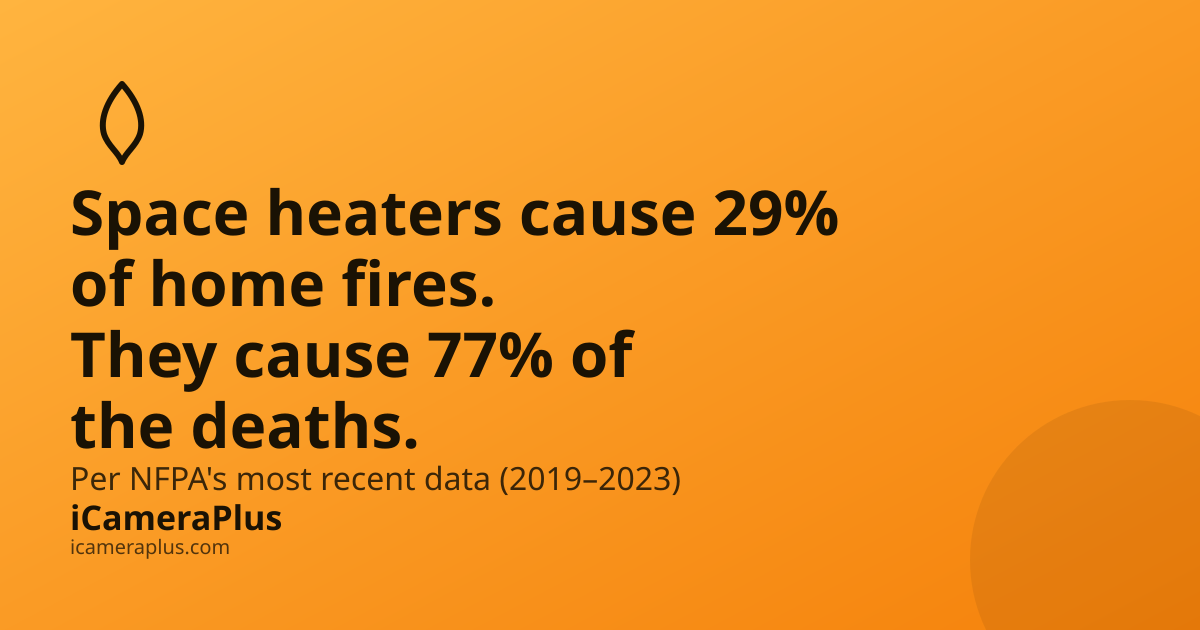
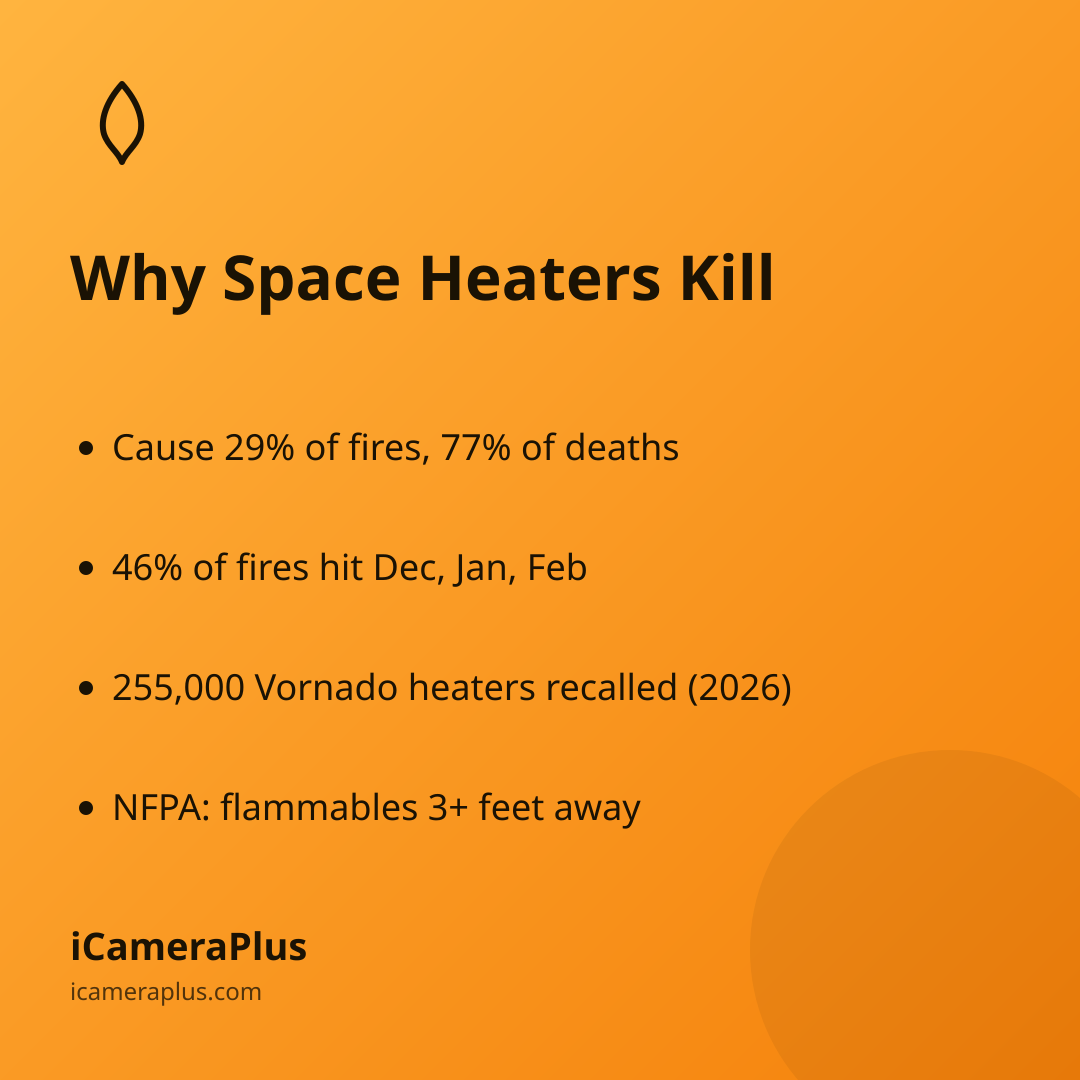
Yes — by a wide margin. Space heaters and heating stoves cause only about 29% of U.S. home heating equipment fires, but they account for 77% of the deaths and 71% of the injuries from those fires, according to the National Fire Protection Association's most recent home heating fires report, based on 2019–2023 data. Nearly half of those fires — 46%, per the same NFPA report — happen in December, January, and February, the exact months space heater use peaks.
Space heaters cause 29% of home heating fires — but 77% of the deaths. That gap between how often space heaters cause fires and how often those fires kill someone is the single most important fact to know before you plug one in this winter.
How Many House Fires Do Space Heaters Actually Cause?
U.S. fire departments responded to an estimated annual average of 38,881 home heating equipment fires between 2019 and 2023, resulting in 432 civilian deaths, 1,352 injuries, and $1.1 billion in property damage, according to the NFPA's Home Heating Fires report. Within that total, space heaters and heating stoves stand out: they're involved in roughly 3 in 10 heating fires, but close to 8 in 10 of the people who die in a home heating fire die in one started by a space heater.
"Each winter, when heating systems kick into high gear, so do the number of home heating fires," said Lorraine Carli, NFPA's vice president of Outreach and Advocacy, in the organization's release of the findings. "Our goal is to make sure people know when and where home heating fires most often occur, along with ways to prevent them."
Why Are Space Heaters So Much More Deadly Than Other Heating Equipment?
Central furnaces and heat pumps are installed, inspected, and largely left alone. Space heaters are portable by design — which is exactly the problem. They get carried into bedrooms, bathrooms, and home offices, placed close to bedding, curtains, or stacks of paper, plugged into extension cords they weren't built for, and, most dangerously, left running in a room nobody is watching. The NFPA's 46% concentration of fires in the December–February window lines up with exactly when portable heaters come out of the closet and start running for hours at a stretch.
Is There a Current Recall on the Space Heater in Your Closet?
Here's a concrete, current example of how a seemingly fine heater becomes a fire risk: in June 2026, the U.S. Consumer Product Safety Commission recalled roughly 255,000 Vornado SRTH small room tower heaters after the fan blade was found to detach from the motor shaft, which can let the unit overheat and melt internal parts. The CPSC logged 32 overheating incidents, including 8 fires and one smoke-inhalation report, before issuing the recall. The company is offering a full refund — see the official CPSC recall notice for model numbers and how to claim it.
It's worth a two-minute check of CPSC.gov's recall search for the brand and model printed on the bottom of any heater you're about to pull out of storage, especially one that's been sitting unused for a year or more.
Can a Security Camera Help With a Space Heater You Can't Watch Constantly?
To be clear about what a camera can and can't do here: no camera detects heat, smoke, or an electrical short, and it's not a substitute for a working smoke alarm — which remains the device actually designed to catch a fire starting. But a camera does solve a narrower, very common problem: not remembering whether you actually turned the heater off.
If you've already set up an old phone as a camera watching a nursery, home office, or workshop where a space heater runs, you can open the web panel from anywhere and check the live view to confirm the heater is off before you leave the house, or scroll back through the continuous recording if you're not sure when you unplugged it. That's the core idea behind iCameraPlus: it turns a phone you already own into a camera with continuous recording, a private cloud archive you can browse from the web, live view, and remote start/stop — so checking on a room doesn't require being in the room. It's a peace-of-mind check, not a fire-prevention device.
If your home already loses power occasionally when space heaters overload a circuit, it's worth knowing what that does to your camera coverage — see our guide on whether security cameras keep recording during a power outage.
What Does the NFPA Recommend for Space Heater Placement?
The NFPA's own home heating safety guidance boils down to a handful of rules that account for most of the risk reduction:
- Keep anything flammable 3+ feet away
- Plug directly into a wall outlet
- Turn it off when you leave or sleep
- Choose a model with auto shutoff
If you're closing up a cabin, guest room, or vacation property for the season, the same discipline applies to whatever heating you leave running there — our guide on securing a vacation home for winter covers the broader checklist.
Quick answers
Is it safe to leave a space heater on overnight while you sleep? The NFPA and CPSC both advise against it — most heater-related fire deaths involve a unit left running unattended, including overnight. Turn it off before bed and use central heat or extra blankets instead.
Does homeowners or renters insurance cover a space heater fire? Typically yes for accidental fires, but coverage details, deductibles, and exclusions vary by policy and insurer, so check your specific policy or ask your agent rather than assuming.
What's the biggest single mistake people make with space heaters? Running them on extension cords or power strips not rated for the load, which the CPSC and NFPA both flag as a major overheating and fire risk — plug directly into the wall instead.