How Many Security Cameras Does a Home Actually Need in 2026?
This article was produced with AI assistance. Sources are listed at the end.
Most homes need somewhere between four and eight cameras to cover every door, driveway, and blind spot. But the average U.S. household that actually owns a smart camera or video doorbell has only 2.21 of them, according to Parks Associates' 2024 consumer research. That gap between "full coverage" and "what people actually install" is the real story behind home security in 2026 — and it's one of the main reasons a spare phone has become a popular way to close it.
- Cover every exterior door
- Add blind-spot cameras next
- Reuse an old phone first
- Check local recording laws
How many cameras does the average home actually have in 2026?
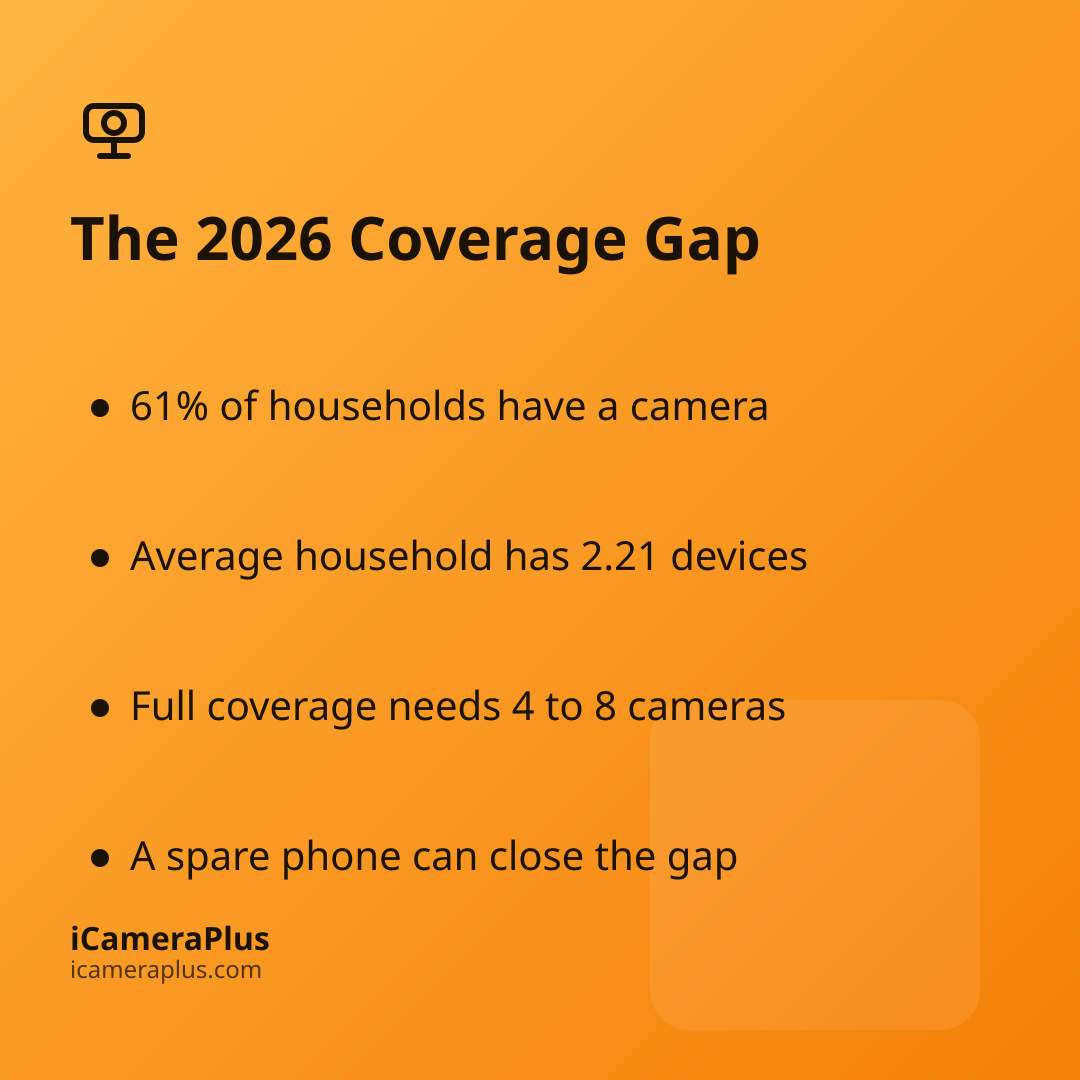
Camera ownership has grown fast, but the number of devices per household hasn't kept pace with the number of spots a typical house actually needs watched. SafeHome.org's 2026 Home Security Market Report found that 61% of U.S. households now have at least one indoor or outdoor security camera — about 74.9 million homes — up from 52% in 2024. An estimated 58.9 million households also use a video doorbell.
Those are strong adoption numbers. But adoption isn't the same as coverage. Parks Associates, which surveys thousands of U.S. internet households each quarter, found that among households that own smart cameras or doorbells, the average is just 2.21 devices per household — typically one doorbell and maybe one backyard camera. For a detached home with a front door, back door, side gate, garage, and driveway, that's rarely enough to actually see what's happening around the property.
How many cameras do you actually need for full coverage?
There's no single official number — it depends on your home's layout — but the guidance across security buying guides is fairly consistent by home size:
- Apartment or small condo: 1–2 cameras (front door plus one shared or interior space)
- Small single-family home: 2–4 cameras (front, back, and one side or driveway angle)
- Medium home: 4–6 cameras (every exterior entry point, plus a garage or basement)
- Large home or multi-structure property: 6–10+ cameras (exterior perimeter plus interior common areas)
That tracks with what buyers say they actually want: Security.org's 2026 DIY Home Security Systems Market Report found that 83% of shoppers want an outdoor security camera and 81% want a video doorbell as part of their setup — meaning most people are already planning for more than just a front-door view, even if their current setup doesn't reflect it yet. The common thread across all of this: every exterior door and every way onto the property deserves its own view. A single doorbell camera covers the front step — it tells you almost nothing about the side gate, the back patio, or the garage interior where a package, a bike, or a car actually sits.
Why doesn't everyone already have full coverage?
Cost is the biggest reason. Buying one dedicated camera is an easy decision; buying four to eight of them — plus the cloud storage plan each one often requires — adds up quickly, and prices for dedicated hardware have been climbing. We've covered why security camera prices are rising in 2026 in more detail, but the short version is that each additional camera isn't just a one-time purchase — it's often a recurring bill too.
The average camera-owning household has 2.21 devices — rarely enough to watch every entry point.
That's exactly where a phone you already own fits in. If you have an old iPhone or Android sitting in a drawer, apps like iCameraPlus turn it into a dedicated camera that records continuously, with footage kept in a private cloud archive you can browse and view live from a web panel — all without buying another piece of hardware. It's a practical way to add coverage to a second or third blind spot instead of leaving it dark. We've also compared this approach directly against buying a new discounted camera versus reusing an old phone if you're weighing a purchase.
Where do the "extra" cameras actually pay off?
Once the front door is covered, the next cameras people add tend to go to the spots that don't have an obvious dedicated product already watching them:
- Backyards and side gates, where most dedicated systems stop at the front
- Garage interiors, where bikes, tools, and cars actually sit
- A nursery or playroom, for the kind of everyday baby monitoring a doorbell can't do
- A living room or yard, for keeping an eye on a pet while you're out
None of these need a new dedicated gadget. A phone that still has a working camera and a power outlet nearby can cover any one of them, which is why repurposing old devices has become a normal step in a home security setup rather than a workaround.
Quick answers
Is one security camera enough for a house? One camera — usually a doorbell — covers the front door, but it leaves every other entry point unmonitored. For anything beyond an apartment, security buying guides generally recommend covering the front, back, and any side access points separately.
Do more cameras actually deter break-ins? Visible cameras can reduce the odds an opportunistic intruder targets a property, but a camera only helps the areas it can actually see — a gap in coverage is effectively unmonitored no matter how many cameras are elsewhere on the property. Check your local laws before recording areas that may capture neighbors or public space.
Can I use an old phone instead of buying a new camera? Yes. A phone with a working camera and a stable power source can record continuously and store footage in the cloud, which makes it a reasonable way to cover an additional entry point without buying and subscribing to another dedicated device.