Remote Caregiving Nearly Doubled in 5 Years: What New AARP Data Means for Checking On Aging Parents
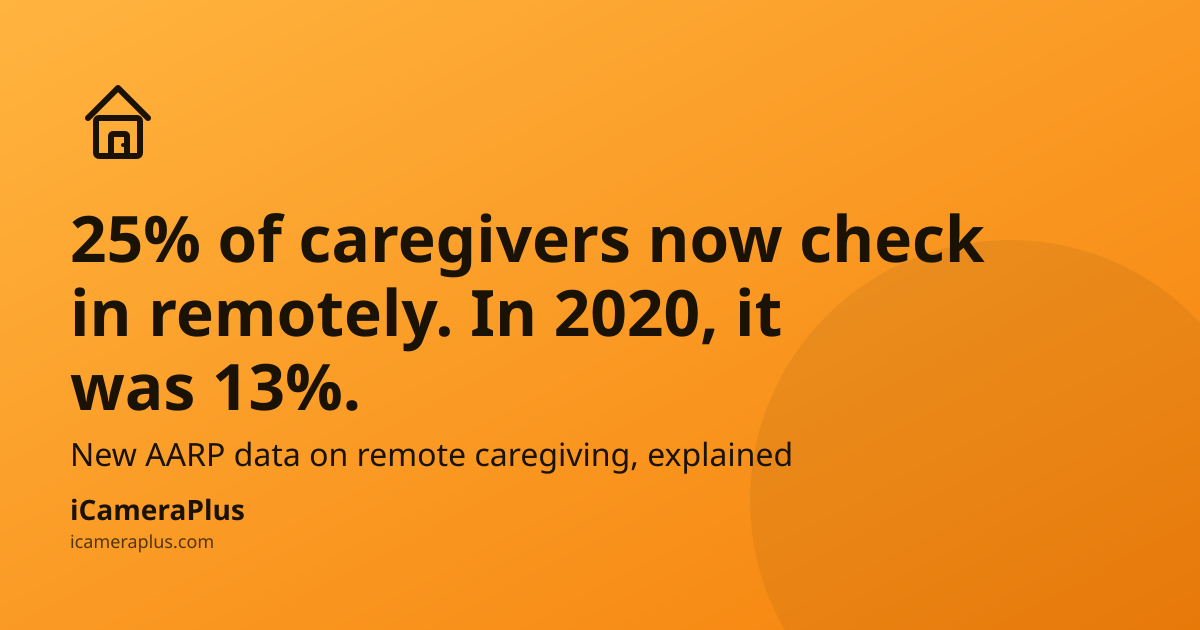
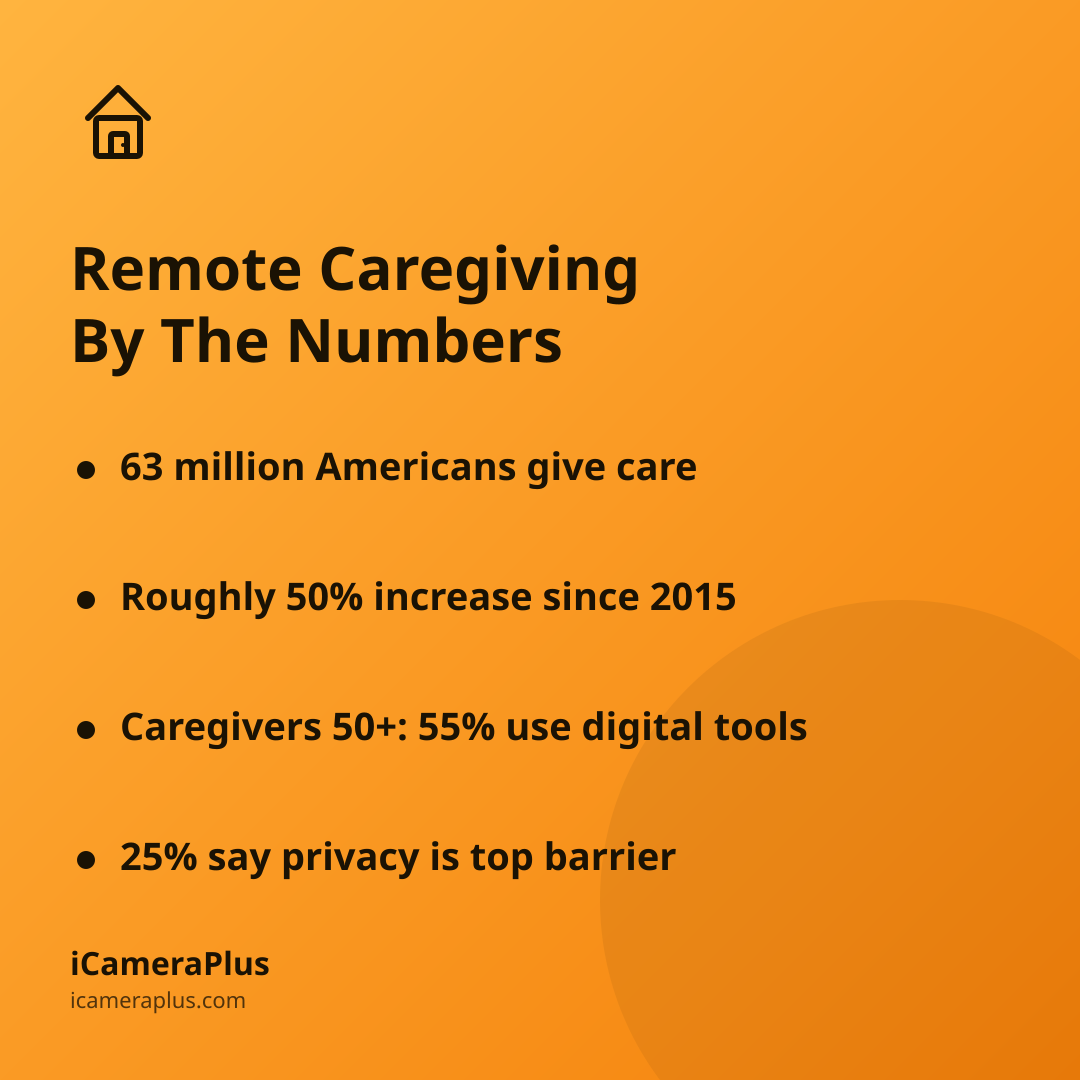
If you've spent this year checking a doorbell app to see whether your mother made it to the mailbox, you're part of a fast-growing group. The 2025 Caregiving in the US report from AARP and the National Alliance for Caregiving found that remote monitoring by family caregivers jumped from 13% in 2020 to 25% in 2025 — roughly doubling in five years — as more households look for ways to stay connected to aging relatives without moving in or moving them out.
The shift comes as caregiving itself has become far more common. The same report found that 63 million Americans — about 1 in 4 adults — are now providing unpaid care to an older adult or family member with a serious illness or disability, a roughly 50% increase since 2015. In July 2026, AARP's nonprofit tech-training arm OATS released a follow-up report, Caring for Caregivers, pointing to a specific gap: many caregivers want to use technology to ease the load, but few have had any real training on how to do it well.
That gap matters, especially when the technology in question is a camera pointed at a parent's front door. Done thoughtfully, it can offer real peace of mind. Done carelessly, it can feel like exactly what it shouldn't: someone watching you in your own home without a say in it. Here's what the new data actually shows, and how to check in on a home responsibly.
Why so many caregivers are turning to remote tools
AARP's 2026 Tech Trends report found that 55% of caregivers age 50 and older now use at least one digital tool — telehealth visits, medication reminders, location check-ins, or home monitoring — to help manage a relative's care. The report also flagged the biggest thing holding the rest back: data privacy concerns, cited by 25% of respondents as their top barrier to adopting new caregiving technology.
That tension is reasonable. Most caregiving happens for people who still live independently and value that independence. A camera that's framed as "keeping an eye on Dad" can land very differently than one framed as "letting me know if the front door opens at 2 a.m." The difference isn't the hardware — it's who agreed to it, and what it's actually pointed at.
What's actually driving the worry
Part of what's pushing families toward remote check-ins is a real safety statistic, not just anxiety. The Centers for Disease Control and Prevention reports that falls are the leading cause of injury among adults 65 and older, with more than 14 million — about 1 in 4 — older adults reporting a fall every year. The CDC also notes that the age-adjusted fall death rate climbed 21% between 2018 and 2024, rising from 64.7 to 78.4 deaths per 100,000 older adults, with 43,020 fall-related deaths recorded in 2024 alone.
A home security camera is not a medical device, and it won't detect a fall inside a bathroom or bedroom — nor should it be pointed there. But a camera covering an entryway, driveway, or shared living space can answer a narrower, still-useful question: is anyone coming or going as expected? Did the caregiver who visits three times a week actually show up? Did a package sit on the porch for three days, a common sign that no one has left the house? Those are home-security questions, not health-monitoring ones, and they're a reasonable place for a camera to help.
Doing it the right way: consent and placement first
Before any device goes up, the conversation matters more than the setup. AARP's own long-distance caregiving guidance encourages families to talk openly with the relative being cared for about what support looks like and who's involved, rather than making decisions on their behalf. The same principle applies directly to a home camera:
- Get agreement first. This should be a camera the older adult knows about and has said yes to — for monitoring the home, not for watching them personally.
- Keep it to shared and entry spaces. A front door, driveway, or living room is fair game. Bedrooms and bathrooms are not, regardless of intent.
- Be transparent about who can view it. Decide together which family members get access, and say so out loud — a camera that's a surprise to anyone in the house undermines the trust it's meant to build.
- Revisit it periodically. Needs change. What felt like enough monitoring six months ago might not be enough — or might feel like too much — today.
A low-cost way to start: the phone that's already in a drawer
One reason remote monitoring has lagged behind interest in it is cost — buying, installing, and subscribing to a new camera system isn't a small ask, especially for a parent on a fixed income. This is where an old phone can genuinely help. Most households already have one sitting unused, and a spare phone has everything a basic security camera needs built in: a camera, a network connection, and a power source.
An app like iCameraPlus turns that old phone into a continuously recording camera that archives footage off the device, so nothing is lost if the phone is lost, damaged, or its storage fills up. It also supports remote live view and motion alerts — so a caregiver a few states away can get a notification when the front door opens, or check in on the porch during an expected delivery window, without a new purchase or a wall-mounted system. For more on setting one up, see our guide to turning a phone into a home security camera.
What a camera can't replace
It's worth being honest about the limits here. A home camera tells you whether a door opened — it doesn't tell you whether someone took their medication, felt dizzy, or is doing okay physically. If the concern is a medical one, that calls for a medical alert system or a fall-detection wearable designed for that purpose, not a repurposed security camera. And no camera should be treated as a substitute for actually calling, visiting, or asking a parent how they're doing. The AARP data suggests families are increasingly layering tools together — a home camera for the front door, a check-in call for everything else — rather than expecting one device to cover it all.
The bottom line
Remote caregiving is growing fast, and the reasons are sound: more people are caring for aging relatives, falls remain a serious risk, and families increasingly live far apart. A camera aimed at a shared entryway — set up with a parent's knowledge, not around it — can genuinely ease that worry without turning into the kind of blanket surveillance no one asked for. Starting with a phone already in the house keeps the cost low and the setup simple, which matters when the bigger goal is a conversation, not a gadget.
Sources
- AARP, "2026 Technology Trends and Adults 50-Plus"
- McKnight's Home Care, "AARP: 55 percent of family caregivers use tech to coordinate care" (2026)
- OATS from AARP, "Caring for Caregivers" report (July 2026)
- AARP and National Alliance for Caregiving, "Caregiving in the US 2025"
- AARP, "Tips for Being a Long-Distance Family Caregiver"
- CDC, "Facts About Falls" (Older Adult Fall Prevention)
- CDC/NCHS, "Unintentional Fall Deaths in Adults Age 65 and Older" (Data Brief 532)