Right to Repair Just Kicked In: What 2026's New Laws Mean for the Old Phone in Your Drawer
If you've put off fixing a cracked screen or a dying battery because it felt like a losing battle against the manufacturer, 2026 is the year that changed. Right-to-repair laws are now in effect in two states, and the European Union's version arrives on July 31, 2026 — days from now. None of this is theoretical anymore. It's a real shift in how long a phone is allowed to stay useful, and it has a direct line to the e-waste piling up in landfills and the phone sitting in your junk drawer right now.
What Actually Changed in 2026
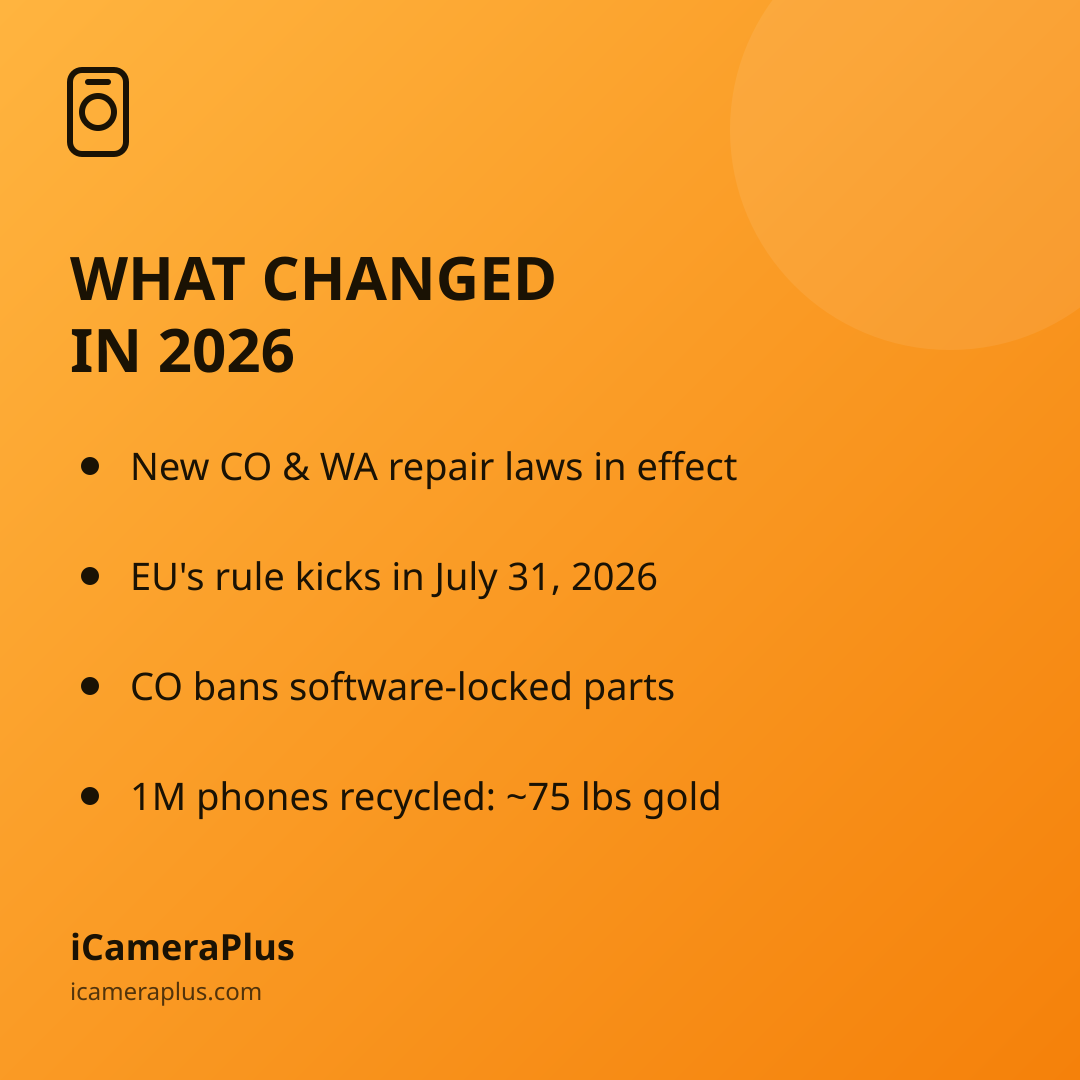
On January 1, 2026, two state right-to-repair laws for consumer electronics took effect in the United States. Colorado's HB24-1121, the Consumer Right to Repair Digital Electronic Equipment Act, requires manufacturers of phones and other digital electronics to sell the same parts, tools, and repair documentation to consumers and independent shops that they give their own authorized technicians — software tools must be provided free of charge, and the law bans "parts pairing," the practice of software-locking a replacement part so it won't work unless installed by the manufacturer (Colorado General Assembly / bill sponsors, 2024).
Washington's parallel law, HB 1483, also took effect January 1, 2026, and covers phones, computers, and other digital electronics sold in the state since mid-2021, with the state attorney general empowered to enforce it (Washington State Legislature, 2025).
Across the Atlantic, the EU's Right to Repair Directive (2024/1799) requires all 27 member states to have it written into national law by July 31, 2026. It obligates manufacturers to repair covered products — including smartphones and tablets — "within a reasonable time and for a reasonable price," publish spare-parts pricing, and give consumers who choose repair over replacement an extra year of legal warranty (European Commission, 2024).
Why This Is an E-Waste Story, Not Just a Wallet Story
The case for these laws isn't only "cheaper repairs." It's what happens when repair is the hard option and replacement is the easy one. According to the Global E-waste Monitor 2024, published by the UN Institute for Training and Research (UNITAR) and the International Telecommunication Union (ITU), the world generated 62 million tonnes of e-waste in 2022 — an 82% jump since 2010 — and only 22.3% of it was documented as properly collected and recycled (UNITAR, 2024).
Phones sit inside a category the report calls "small IT and telecommunication equipment," which also includes laptops, routers, and GPS units. That category alone produced 4.6 million tonnes of waste in 2022, with a recycling rate of just 22% (ITU / UNITAR, 2024). Left on its current path, the report projects global e-waste will hit 82 million tonnes by 2030 — while the documented recycling rate actually falls to 20%, because collection systems aren't scaling with the volume. Making devices repairable, rather than disposable by design, is one of the few levers that slows the front end of that curve instead of just managing the back end.
The Phone Already Sitting in Your Drawer
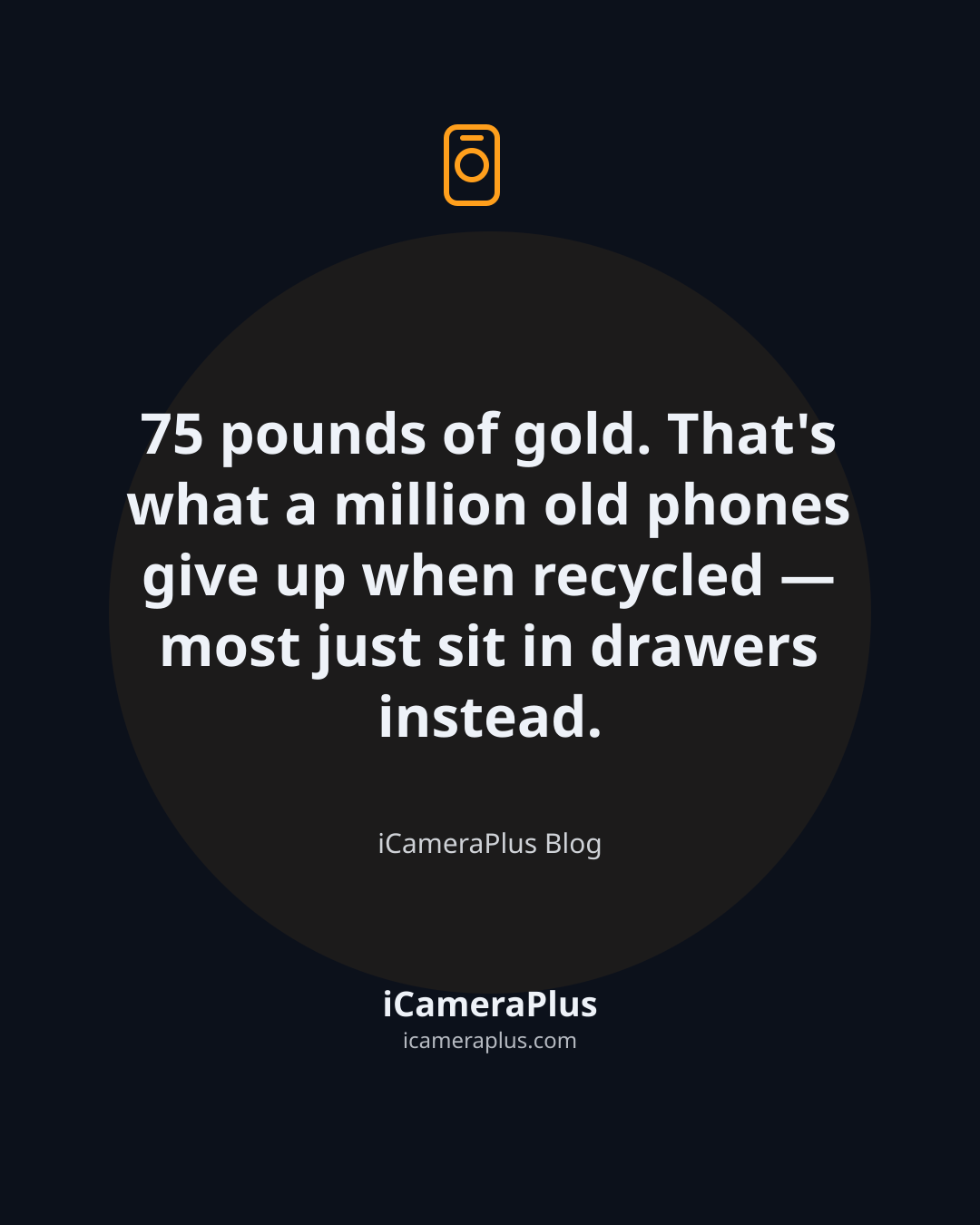
Right-to-repair laws help the next phone you own last longer. They don't do anything for the one you've already replaced. The U.S. Environmental Protection Agency notes that recycling just one million cell phones recovers roughly 35,000 pounds of copper, 772 pounds of silver, 75 pounds of gold, and 33 pounds of palladium — real, reclaimable value that mostly sits idle in drawers instead (U.S. EPA, Electronics Donation and Recycling). A phone that still powers on, whether it's been repaired under one of these new laws or is simply your last upgrade, is worth more in active use than in a drawer.
The Best Second Career for a Working Phone
Here's the practical version of "keep it in use": an old smartphone that still holds a charge and has a working camera can become a genuinely capable home security camera. Point it at your driveway, front door, or backyard, and instead of retiring in a drawer, it's doing a job — continuous recording, remote live viewing, and motion alerts, with footage stored off the device so it survives even if the phone itself is lost or damaged. Apps like iCameraPlus are built specifically to turn a spare phone into that kind of camera without buying new hardware. If you're weighing what to do with a device you just repaired (or one you're about to replace), it's worth reading through the setup basics at iCameraPlus's home security camera guide before deciding the drawer is the only option.
What to Actually Do With This
- If your phone breaks: ask about repair first. Under these new laws, manufacturers are required to make parts and tools available — repair may now be cheaper and faster than it was a year ago.
- If you're in the EU, watch for your country's implementation of the directive after July 31, 2026; consumer protections and warranty extensions for repairs should follow shortly after.
- If you already have a spare phone that works but isn't your daily device, don't default to the recycling bin as the only "responsible" option — active reuse (as a security camera, a baby or pet monitor, or a dedicated GPS/music device) keeps it out of the waste stream longer than recycling does, and recycling is still there when the phone truly reaches end of life.
- If a phone is genuinely done — cracked beyond use, battery swollen, won't power on — recycle it through a certified e-waste program rather than the regular trash, so the recoverable metals the EPA describes actually get reclaimed.
The laws changing in 2026 don't make your phone last forever. They make it easier to choose repair over replacement — and what you do with the phone after that choice is still up to you.
Sources
- Colorado right-to-repair law (HB24-1121) — Colorado House/Senate Democrats, 2024
- Washington HB 1483 bill summary — Washington State Legislature, 2025
- Directive on the repair of goods — European Commission, 2024
- Global E-waste Monitor 2024 — UNITAR press release, 2024
- The Global E-waste Monitor 2024 — ITU/UNITAR
- Electronics Donation and Recycling — U.S. Environmental Protection Agency