The Real Reason Your Old Phone Never Left the Drawer: What New Research Says About Data Anxiety
If you've got a phone sitting in a drawer somewhere — screen cracked, battery swollen, three generations out of date — you're not alone, and according to new research published this summer, you're probably not just being lazy about it either. A study released in June 2026 set out to figure out why so many Americans hang onto devices they've stopped using, and the answer wasn't procrastination. It was fear.
A New Study Asked 4,000 Americans What They Actually Do With Old Phones
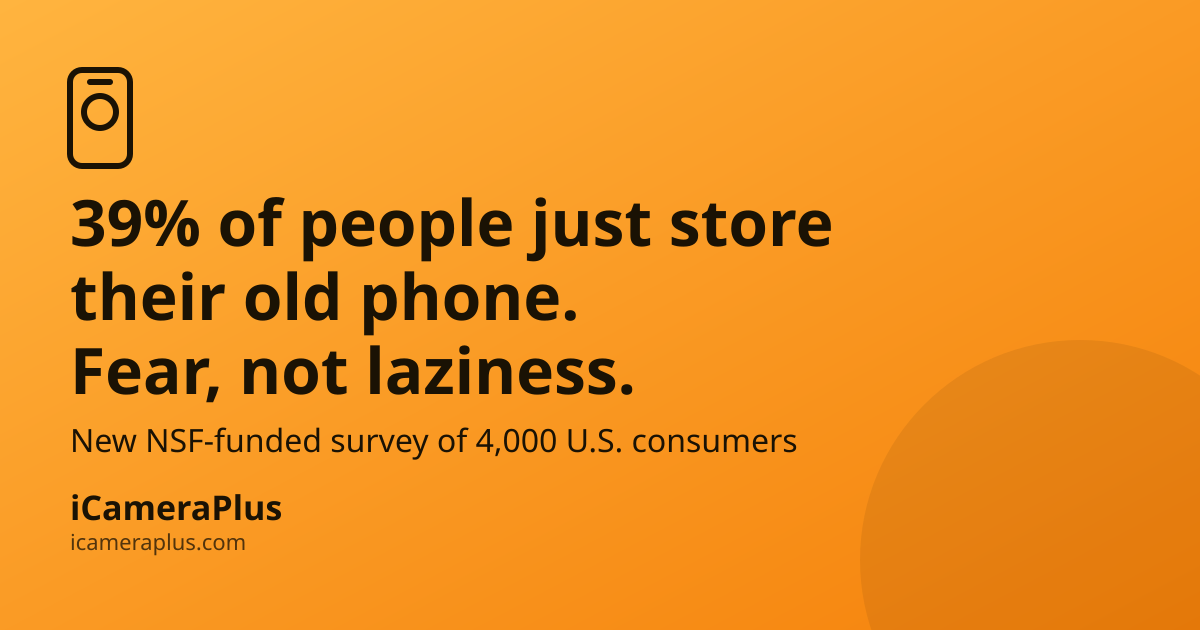
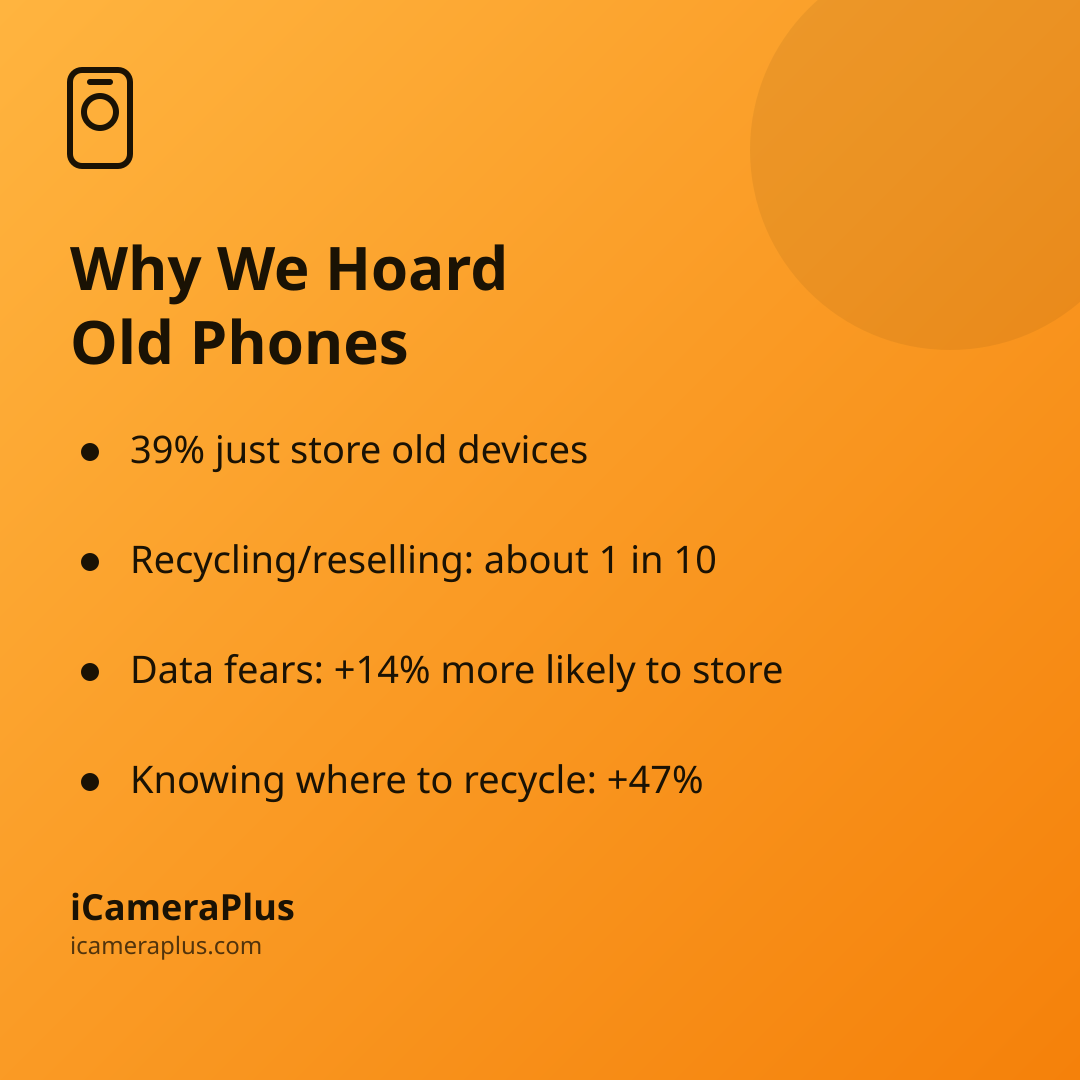
The research, funded by the National Science Foundation and led by Eric Williams and Payam Saeedi at the Rochester Institute of Technology along with Stacey Watson at the University of Waterloo, surveyed 4,000 U.S. consumers about what happens to their electronics once they're done with them. The team published its findings in The Conversation on June 18, 2026, and the results were stark: 39% of people simply store their old phones, tablets, and watches rather than recycling, reselling, or trashing them. Recycling and reselling — the two outcomes best for the environment — each accounted for only about 1 in 10 devices. Roughly 9% ended up in the trash.
The Surprising Culprit: It's Not Laziness, It's Data Anxiety
What makes this study different from earlier ones is that the researchers dug into why people default to storage. They found that concern about data security made people 14% more likely to store a device rather than hand it off to a recycler, and worry about a resale transaction made people 9% more likely to store it as well. Notably, the fear didn't necessarily show up when people were simply asked about their intentions — it kicked in once they were actually facing the decision to hand their phone to someone else. As the researchers put it, worry about leaking personal information "kicks in only when someone is facing the real decision" of handing off a device.
Interestingly, the same study found that people who knew where to recycle a device were 47% more likely to actually do it — but that same knowledge also nudged people toward reselling, which carries its own data exposure worries. In other words, information alone doesn't fully solve the problem, because the underlying anxiety about a stranger going through your photos, messages, and accounts doesn't go away just because you know the drop-off location.
That Instinct Isn't Irrational
It's tempting to write this off as overcaution, but the instinct to protect a device full of years of photos, banking apps, and logged-in accounts is a reasonable one. And the stakes for the planet aren't small either. According to the United Nations' Global E-waste Monitor 2024, published by UNITAR and the ITU, the world generated 62 million metric tons of electronic waste in 2022, yet only 22.3% of it was documented as properly collected and recycled — leaving an estimated $62 billion in recoverable materials unaccounted for. E-waste generation is on pace to hit 82 million tonnes by 2030. Every phone that sits unused in a drawer instead of being reused productively is a small contributor to that gap — but so is every phone handed off before its owner is genuinely comfortable with where their data is going.
The Option the Survey Didn't Ask About: Keep the Phone, Give It a Job
The RIT/Waterloo study measured three outcomes — store, recycle, resell — plus trash. It didn't measure a fourth option that sidesteps the entire dilemma: keep the phone, but actually use it, in a way that never requires handing your data to anyone else.
A retired phone already has everything a home security camera needs — a camera, a microphone, Wi-Fi, and a battery. Turning it into one means your old data anxiety becomes irrelevant, because the device never leaves your house or your control. That's the idea behind apps like iCameraPlus, which turn a phone you already own into a home security camera with remote live view, motion alerts, and an off-device archive — all while the phone itself stays exactly where you put it, watching only what you point it at.
It's a genuinely different answer to the "drawer problem" than recycling or reselling, because it doesn't ask you to trust anyone else with a device that's been part of your daily life for years. Some practical ways an old phone can go back to work watching your own property:
- Mounted at the front door or driveway as a security camera covering entrances and packages
- Propped in a nursery to keep an eye on a sleeping baby as a baby monitor
- Set up in the living room or yard to check on a pet during the workday as a pet camera
- Placed to keep a watchful, transparent eye on in-home caregivers as a nanny cam, disclosed to everyone in the household
None of this requires the phone to touch anyone else's hands, which is precisely the piece of the equation the new research suggests people care about most.
If You Do Decide to Recycle or Resell Instead
Repurposing isn't the right call for every device — sometimes a phone is too old or damaged to be useful, and recycling is genuinely the better outcome. If that's your situation, the RIT/Waterloo findings point to a simple fix: knowing exactly where and how to recycle responsibly made people far more likely to follow through instead of defaulting to storage. Local electronics retailers, manufacturer trade-in programs, and municipal e-waste collection days are all documented, low-friction options — the main thing standing between intention and action, per the study, is simply not knowing where to start.
The Bottom Line
The "drawer problem" isn't really about clutter. It's about millions of people making a quietly sensible calculation: better to keep a device with years of personal data on it close, than to hand it to someone else and hope for the best. The new research validates that instinct rather than dismissing it — but it also points at the gap in the current choices most people think they have. Recycle, resell, or store isn't the whole list. Putting a retired phone back to work watching your own front door, nursery, or living room keeps the data exactly where you already trust it: with you.
Sources
- The Conversation: "The drawer problem: Why so many of us can't let go of our old electronics, and what we can do about it" (June 18, 2026)
- Fortune: "Almost 4 in 10 Americans have a 'junk drawer' full of their old electronics. It says a lot about data security" (June 21, 2026)
- UNITAR: "Global e-Waste Monitor 2024: Electronic Waste Rising Five Times Faster than Documented E-waste Recycling" (March 20, 2024)
- ITU: The Global E-waste Monitor 2024