Can a Landlord Make You Remove Your Security Camera? What the Law Says in 2026
This article was produced with AI assistance. Sources are listed at the end.
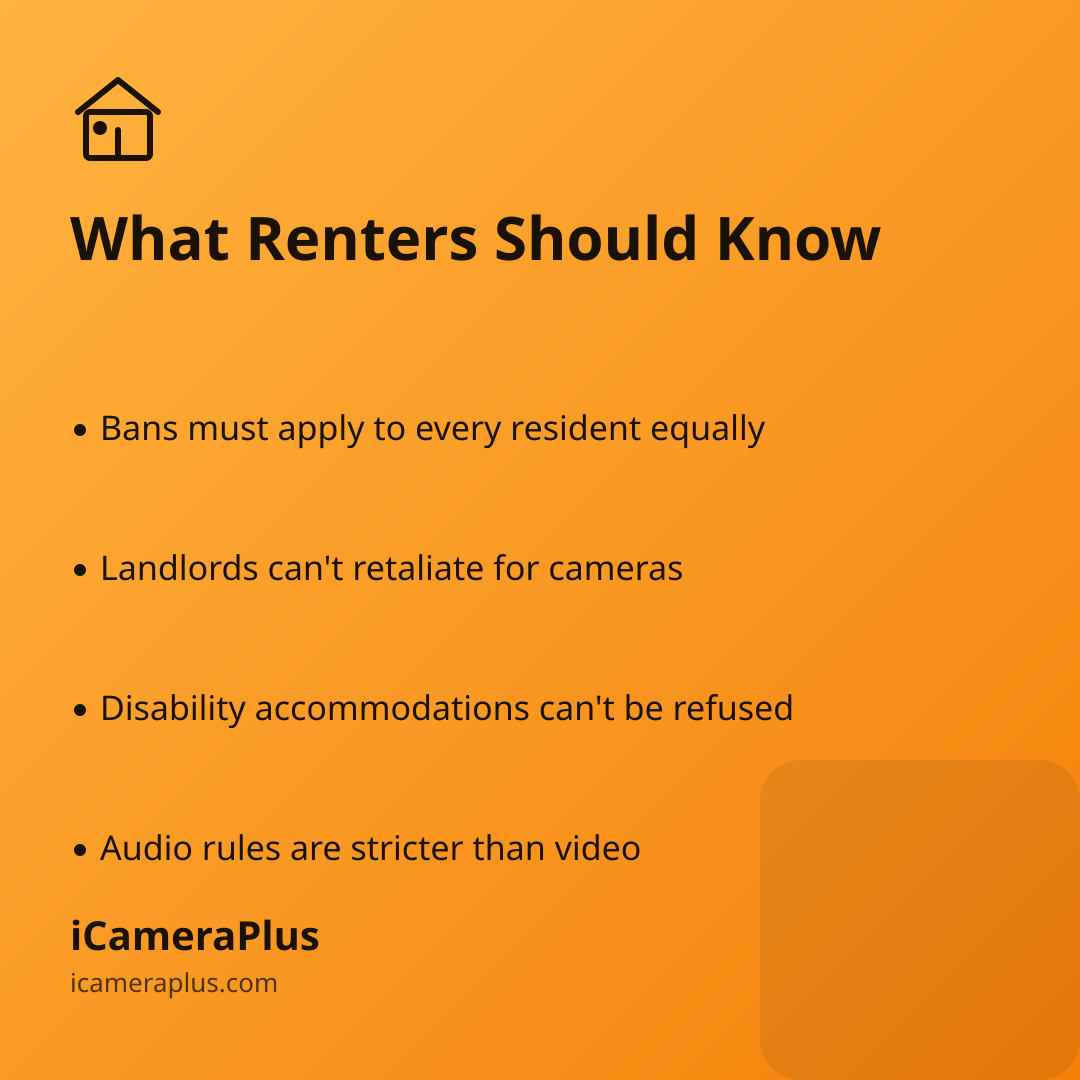
In most cases, a landlord can require you to remove a security camera you installed yourself — but only if the rule is written into your lease or building policy and applied evenly to every resident. What a landlord usually cannot do is single you out, retaliate against you for installing one, or refuse a camera-related accommodation tied to a disability. The details depend heavily on your specific lease, your state's recording laws, and where the camera points.
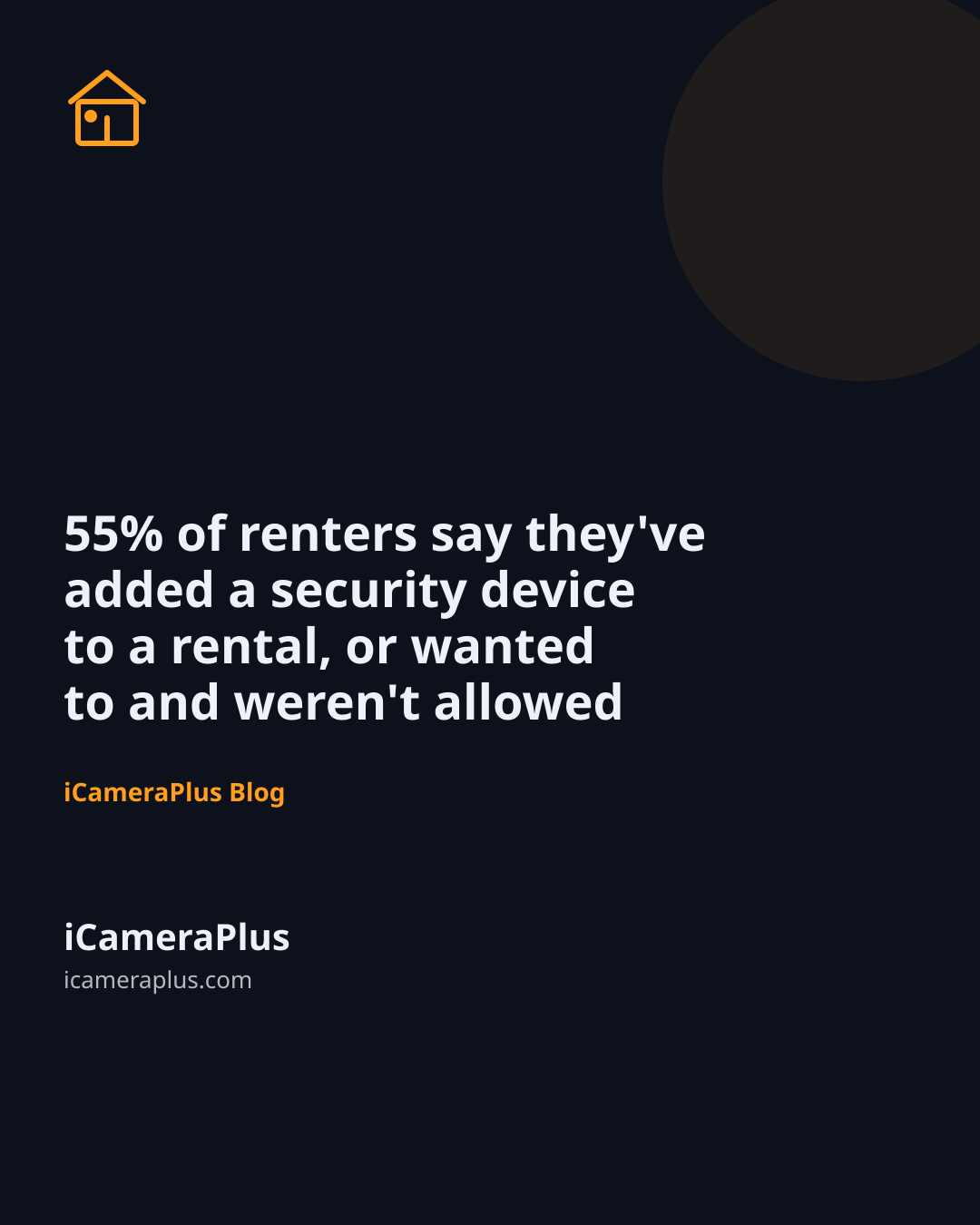
This has stopped being a theoretical question. More than half of U.S. renters have already acted on it: 55% of renters say they've added a security device to a rental, or wanted to and weren't allowed, according to an August 2026 survey of 800 U.S. renters by Rently. Among those who did add something, 22% installed a video doorbell and 19% added an indoor or outdoor camera.
Can a Landlord Legally Force You to Take Down a Camera?
Yes, in many circumstances — if the lease says so, or if a building-wide policy bans exterior or hardwired devices. Landlords and condo and homeowners associations generally have the right to control what gets permanently attached to the property, since a doorbell camera or exterior housing can mean drilling into siding, rewiring a doorbell circuit, or altering a shared hallway.
What landlords are on much shakier ground doing is enforcing that rule selectively. A legal analysis published in January 2025 by attorneys at Wilson Elser, writing in The National Law Review, reviewed several pending U.S. lawsuits over tenant and condo-owner doorbell cameras and concluded that courts have generally allowed housing providers to restrict the devices — but warned that landlords "should ensure that the rule is applied to all residents consistently to avoid allegations of differential treatment based on residents' membership in various protected classes." Many states also have their own anti-retaliation statutes that protect tenants who exercise specific legal rights — California's Civil Code § 1942.5, for example, bars a landlord from retaliating against a tenant who reports a habitability problem or joins a tenants' organization. These statutes are usually narrower than a general "any legal right" shield, so whether one would apply to a camera dispute specifically depends on your state's law — check it before assuming you're protected.
What Does Your Lease Actually Say About Cameras?
Your lease is the first and most important document here — more so than any state statute. Three things to check before you install anything:
- Is there a device or alterations clause? Many leases ban anything attached to doors, siding, or common-area walls without written consent.
- Does it mention smart devices by name? Some newer leases specifically address doorbells, cameras, or smart locks.
- Is there a process for requesting an exception? If you ask in writing and get approval, you have a record that protects you later.
If the lease is silent, you're relying on state landlord-tenant law and whatever a judge decides counts as a "reasonable" restriction — which is exactly the gray area the pending cases described above are trying to settle. This is a general overview, not legal advice for your specific situation; a local tenant-rights attorney or legal aid office can tell you how your state's law applies to your lease.
Can a Landlord Say No to a Camera as a Disability Accommodation?
This is where the law is least ambiguous. The U.S. Department of Housing and Urban Development charged a property management company and the property's owners in Decatur, Georgia, with disability discrimination in a February 2024 Fair Housing Act case after they refused a hearing-impaired tenant's request for a service animal and a visual doorbell — a device that flashes or vibrates instead of ringing. The case settled in June 2024. Under the Fair Housing Act, a landlord generally has to grant a reasonable accommodation request tied to a documented disability, even if the building otherwise bans the device.
Does It Matter Whether the Camera Records Audio?
Often more than video does. Every state treats audio recording as more sensitive than video, and most require at least one party's consent to record a conversation — Minnesota, for example, is a one-party consent state under Minnesota Statutes § 626A.02, while roughly a dozen states require everyone being recorded to agree. A camera that captures a shared hallway, a neighbor's porch, or a leasing office conversation can create liability that has nothing to do with your lease at all. Check your own state's audio consent rule before you turn on a microphone, not just whether the camera itself is allowed.
What's the Safest Way to Add a Camera Without a Landlord Fight?
Keep the device indoors, unattached to the building, and pointed at your own space. That one choice sidesteps most of the disputes above, since lease "alterations" clauses are written for things that get drilled, glued, or wired into the property — not a phone sitting on a shelf.
This is where repurposing a phone you already own works in your favor as a renter. iCameraPlus turns an old phone into a continuously recording camera with footage saved to a private cloud archive you can check from the web — no mounting bracket, no drilled holes, no rewiring a doorbell, and nothing for a landlord to object to on alterations grounds, because there's no alteration. If your main concern is a window-facing view of the yard or driveway rather than a hallway, it's also worth reading how a camera performs shooting through glass before you decide where to put it.
- Check your lease's alterations clause first
- Get exceptions in writing
- Avoid audio in shared or common areas
- Keep cameras indoor-facing and unattached to the building
Your lease decides more about your camera rights than any state law does.
Quick Answers
Can my landlord make me remove a Ring doorbell specifically? Yes, if your lease bans hardwired or attached exterior devices and the rule applies to everyone — courts reviewing these disputes have generally sided with consistently enforced landlord policies.
Do I need written permission before installing any camera? It's not always legally required, but getting approval in writing protects you if a dispute comes up later, especially for anything attached to shared property.
Can a camera record audio in common hallways? Be cautious — audio consent laws are stricter than video laws in every state, and recording conversations you're not part of can create legal exposure separate from your lease.
Sources
- Rently, 2026 Apartment Access & Security Report
- The National Law Review, "Do Tenants Have a Right to Ring Cameras? Courts Are Weighing In," January 2025
- U.S. Department of Housing and Urban Development, Charge of Discrimination, February 2024
- Minnesota Statutes § 626A.02
- California Civil Code § 1942.5