Is That "Delivery Failed" Text a Scam? How to Tell Before the 2026 Holidays
This article was produced with AI assistance. Sources are listed at the end.
If a text says your package "could not be delivered" and asks you to click a link, confirm an address, or pay a small redelivery fee, it is almost certainly a scam — not a real notice from USPS, FedEx, or UPS. The Federal Trade Commission found that fake package-delivery alerts were the single most-reported type of text scam in 2024, and consumers lost an estimated $470 million to all text scams that year. The good news: these texts are easy to catch once you know the three or four tells, and easy to double-check without ever tapping the link.
The timing matters right now. International Fraud Awareness Week, organized by the Association of Certified Fraud Examiners, runs November 15–21, 2026 — right as holiday shipping volume, and the scam texts that ride along with it, start climbing.
Why Are Delivery Scam Texts Showing Up So Much Right Now?
Delivery-text scams, also called "smishing" (SMS phishing), run year-round, but the Federal Communications Commission notes they spike as holiday shopping ramps up, when a flood of real tracking notifications makes a fake one easy to mistake for the real thing. The FCC has also flagged a newer variant where scammers claim you owe an unpaid "tariff" or customs fee before a package can be released — a twist on the classic redelivery-fee trick.
The FTC's 2024 numbers back up how common this specific scam has become. Fake package-delivery alerts were the single most-reported text scam category that year, ahead of fake job offers, bogus bank fraud alerts, and unpaid-toll texts, according to the FTC's April 2025 Data Spotlight. Total reported losses to text scams of all kinds hit $470 million in 2024 — more than five times what was reported in 2020, even though the number of complaints actually fell over that period, suggesting each successful scam is costing victims more.
What Does a Real Delivery Notice Look Like, Versus a Fake One?
The clearest test comes straight from the carrier itself. The U.S. Postal Inspection Service states plainly that USPS does not send unsolicited texts about delivery problems — it will only text you about a package if you specifically signed up for tracking alerts on that tracking number, and that kind of message will not contain a link asking you to take action. FedEx's official fraud-prevention page states it "does not request, via unsolicited call, mail, text or email, payment or personal information in return for goods in transit or in FedEx custody," and UPS's fraud-awareness page advises customers to go directly to ups.com rather than click a link in an unexpected message. In short, legitimate delivery texts confirm or track a shipment you already know about; none of the three carriers demand a fee, a password, or your Social Security number to "release" a package.
So if you get a text about a delivery you didn't request tracking for, or one that asks you to pay anything to receive a package, treat it as fake by default.
How Can You Tell a Package Text Is Fake?
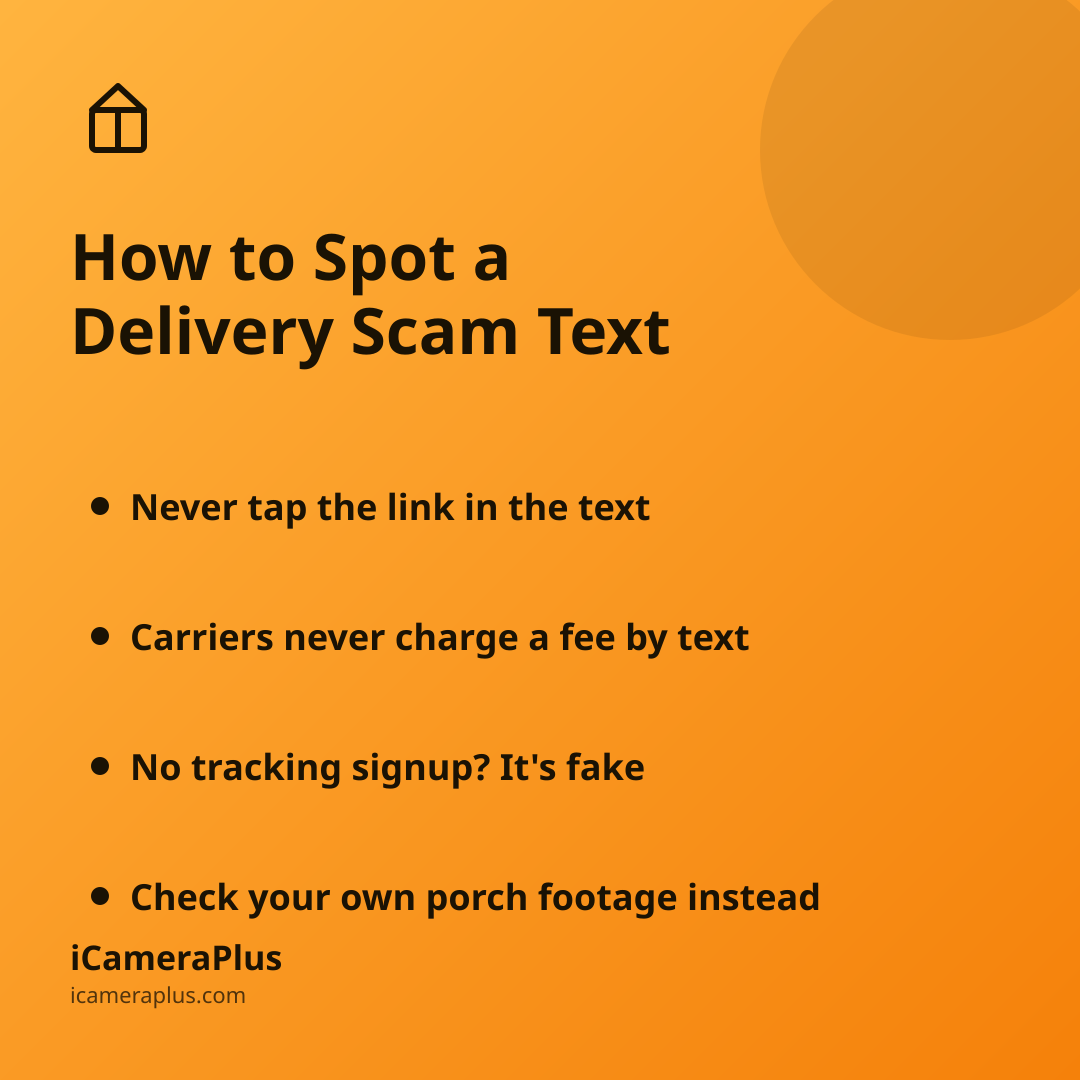
- Don't tap the link — ever
- Check tracking only through the carrier's real app or site
- Look for a payment or fee request
- Verify against your own porch footage
Look for these specific red flags before doing anything else:
- It asks for money. No carrier charges a "redelivery fee" by text link. That request alone is disqualifying.
- It asks for personal or financial details. A real tracking page never needs your card number, SSN, or bank login to show a delivery status.
- You never set up tracking alerts for that package. Per USPIS, that's the single biggest giveaway — legitimate texts only arrive if you opted in first.
- The link looks slightly off. Scam links often mimic a carrier's domain with extra words, hyphens, or a different ending than usps.com, fedex.com, or ups.com.
What If You're Not Sure Whether a Delivery Attempt Actually Happened?
Fake package-delivery texts cost Americans $470 million in just one year. The easiest way to avoid becoming part of that number is to stop trusting the text and start trusting your own front door. If a message claims a carrier "attempted delivery" and left a notice you never saw, you don't have to guess, and you definitely don't have to click a link to find out — check your own doorstep footage for the time window the text claims a driver showed up.
This is one of the quieter, genuinely useful reasons renters and homeowners keep a camera pointed at their entryway during the holiday shipping rush. If you already have an old phone sitting in a drawer, apps like iCameraPlus can turn it into a continuous-recording camera for your porch or entryway, with footage saved to a private cloud archive you can browse from a web panel — so when a questionable text shows up, you can scroll back to the exact time it mentions and see for yourself whether anyone actually came up your walk. That's a transparent, owner-controlled way to settle the question, instead of trusting a link from an unknown number.
If your package really is missing, confirming it on your own footage also puts you in a much stronger position when you contact the retailer or carrier directly — see our guide on using security camera footage to get a refund for a stolen package.
What Should You Do If You Already Clicked the Link?
If you tapped a suspicious delivery link and entered any information, act quickly. Contact your bank or card issuer if you entered payment details, change the password on any account you reused, and watch your statements closely. The FTC and USPIS both recommend forwarding the suspicious text to 7726 ("SPAM") to help carriers block similar messages, and reporting the scam at ReportFraud.ftc.gov or by emailing spam@uspis.gov. Reporting doesn't just protect you — the FTC uses these reports to track emerging scam variants, like the tariff-fee version the FCC recently flagged.
Quick Answers
Does USPS, FedEx, or UPS ever text me first about a delivery problem? No, not unless you specifically signed up for tracking alerts on that exact package. According to USPIS, an unsolicited text about a delivery issue — especially one with a link — is not from USPS.
Is it safe to just ignore these texts? Yes. The FTC and FCC both advise against replying or clicking anything, even to say "stop." Simply forward the text to 7726 and delete it.
Can a security camera actually help with a delivery scam? Indirectly, yes: it can't stop the text from arriving, but it can show you whether a driver actually visited your door at the time the message claims, so you can decide to ignore the text with confidence instead of clicking the link to "check."
Sources
- FTC: New FTC Data Show Top Text Message Scams of 2024; Overall Losses to Text Scams Hit $470 Million (April 2025)
- FCC: How to Identify and Avoid Package Delivery Scams
- U.S. Postal Inspection Service: Smishing — Package Tracking Text Scams
- FedEx: How to Recognize and Help Prevent Fraud and Scams
- UPS: Protect Yourself From Fraud and Scams
- Association of Certified Fraud Examiners: International Fraud Awareness Week 2026
- FTC: Report Fraud